Maintenance
Framing dark sky trip case studies tips: expectations, set honestly
Dark sky trip case studies tips: choose a modest first target, plan around the Moon, know real meteor rates, finish early, and write the night down.

Archive
Maintenance
Dark sky trip case studies tips: choose a modest first target, plan around the Moon, know real meteor rates, finish early, and write the night down.
Guides
Dark sky trip case studies itinerary: a two-night plan at Great Basin built from four worked trips, with named targets, fallbacks and the 2027 Quadrantid peak.
Rules
Three composite accessible night trip examples show why a paved overlook with nearby parking matters most and what to ask about distance, surface, seating, warmth.
Industry
Across four worked dark sky trips, the guided nights succeeded for the same reasons: local knowledge, a fallback plan and honest limits on what could be promised.
Costs
Four worked dark sky trips show cost per usable dark hour, where money is wasted, and why free monthly sky guidance changes the lodging arithmetic.
Industry
Four worked examples of dark sky trips, built from the patterns that recur again and again, showing where each plan succeeded and where it came apart.
Guides
Packing for a telescope trip: protecting the instrument in transit, the small parts that end a night when lost, and what to watch while the optics cool down.
Features
Travel telescopes time: choose a certified dark-sky park by season, weigh night length and observing conditions, and use moon phase to pick dates.
Guides
A telescope night needs an extra hour for setup, cool down and pack down. This covers staying two nights in one place, patient targets and leaving room to stop.
Features
A Great Basin National Park stargazing guide covering Nevada dark sky travel, ranger astronomy program timing, camping reservations and tribal land etiquette.
Features
Travel telescopes options by type, from refractor to GoTo mount, each paired with a named park stop, plus cool-down, power, the Moon and seasonal road closures.
Reviews
How to judge travel telescopes without a ranked list: six road tests, which designs and mounts travel well, what small scopes show, and where to try one.
Reviews
Use this scorecard for an astronomy tour companies comparison: assess observing time, group size, site, transport, target plans, and failure terms.
Features
Astronomy tour companies field: shooting on someone else's schedule, what to pack for a guided night, how to work without disturbing the group.
Guides
Questions to ask before an astronomy tour booking: price and deposit, cloud and refunds, the Moon, guides, site hazards, equipment and solar safety.
Industry
A town keeps astronomy tour companies businesses by fixing late food, dark parking and lighting. Here is the checklist, who pays, and what a town gains.
Features
Arizona light pollution laws shape dark-sky parks near Flagstaff and Tucson, from shielding and curfew rules to trespassing limits on private land at night.
Costs
Stargazing destinations in Arizona and Utah differ sharply in tour prices: Flagstaff and Tucson versus Moab and Springdale, compared line by line.
Guides
Five IDA designation types, a staged application, and federal land agency rules decide which US dark sky places earn certification and keep it.
Guides
Best places to see stars near Hilo include Mauna Kea’s visitor station and Hawaii Volcanoes National Park, with notes on altitude, viewing, and road safety.
Guides
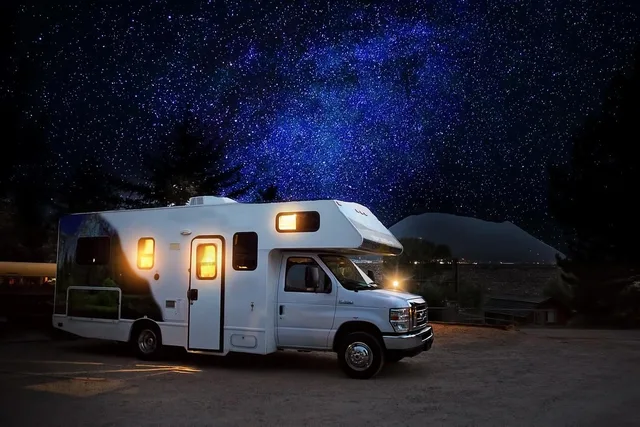
RV stargazing splits into two rulebooks: national park campgrounds with reservations and generator hours, or BLM dispersed camping with fewer limits.
Features
Stargazing destinations on Navajo land: guide, permit and fee rules at Canyon de Chelly, free camping at Navajo National Monument, and etiquette after dark.
Guides
A Los Angeles to Death Valley stargazing drive, planned around moon phase, fuel gaps, BLM camping rules, telescope gear and the darkest viewing windows.
Features
Dark-sky parks in the US and Canada differ in IDA designations, fees, access and border rules. Compare Big Bend, Great Basin, Jasper and Grasslands.
Guides
Monsoon cloud, wildfire smoke and the Milky Way core decide which month works in Arizona, New Mexico, Utah and Texas. Here is how to time a trip.
Guides
Stargazing near Denver runs from Rocky Mountain National Park to Great Sand Dunes, with drive times, moon windows and dark sky club star parties.
Industry
Booking a tour changes the lodging question: you now need a bed near the meeting point, awake at the right hours, and suited to the climate you are traveling into.
Industry
Astronomy tours come in thirteen recognisable forms, from free ranger nights to eclipse expeditions, and the kind you book explains the price.
Guides
Arizona stargazing tours need a land permit behind them. Check booking windows, gate hours and who to call before you pay a Sedona or Flagstaff operator.
Guides
Which US dark sky parks let you have a campfire while camping: fire rules for Big Bend, Death Valley, Great Basin, Cherry Springs, and Natural Bridges.
Guides
Four Colorado dark sky parks with their reported Bortle classes, what makes each one dark, and how to choose among them for a stargazing trip.
Guides
Bortle 1 skies in the US: none of the five parks that come closest has a published class 1 rating, plus what each agency says about its sky.
Guides
A light pollution map US guide: how to read layer dates, zoom levels and address pins, plus the mistakes that hide a site's real darkness until you arrive.
Guides
Jasper Dark Sky Festival runs October 16 to 25, 2026. This two-day Alberta route sets the order of stops, hours for each leg, and drive times.
Guides
A guide to tent camping near Ontario dark sky areas: Torrance Barrens, Killarney, Bruce Peninsula and North Frontenac, with booking windows, fees and checks.
Maintenance
Stargazing travel mistakes tips for a first night on site: verify access, control vehicle lights, track moonrise and clouds, and choose a safe fallback.
Guides
US dark sky festivals 2026 include Cherry Springs, Grand Canyon, Texas Star Party, Bryce Canyon, and Headlands. Best skies are late September.
Guides
Northern lights dark sky preserve Canada: how Yukon and NWT options compare on access, aurora season, and what a designation actually guarantees.
Guides
Two-day itinerary designed around the mistakes people make: a two-night plan written backwards from the usual failures, daylight arrival, no long hike.
Rules
Stargazing travel mistakes accessibility can derail a night. Learn what U.S. standards cover and what to ask about access, altitude, cold, and viewing targets.
Industry
What to ask a stargazing guide to judge local experience, what a guide can and cannot fix, and how ranger programs and clubs offer similar knowledge at no cost.
Costs
Stargazing travel mistakes cost dark-sky time when plans depend on one night. Learn how moon phases, flexibility, gear, and a backup night protect a trip.
Maintenance
The recurring failure modes of stargazing travel, from unsafe solar viewing to dead phones on unlit roads, and the specific habit that prevents each one.
Guides
Astronomy itinerary building packing means planning around moonlight, organizing each observing block, and loading first-needed gear last for a dark-sky trip.
Features
Astronomy itinerary building time by season: night length, the Geminids and Quadrantids, desert weather at two parks, and a worked winter itinerary.
Guides
Astronomy itinerary building planning: a twelve week countdown for an observing trip, from picking the anchor date to the final forecast check.
Costs
An observing itinerary has two budgets. One is money; the other is dark hours. Here is how to plan both, and why free tools protect the second one best.