Reviews
Choosing a Travel Telescope: Six Tests and How to Try One First
How to judge travel telescopes without a ranked list: six road tests, which designs and mounts travel well, what small scopes show, and where to try one.
This is not a ranked list of models, and it reviews no brand. Equipment reviews go out of date within a season. A telescope that suits one traveler is useless to another with a smaller car and a bad back.
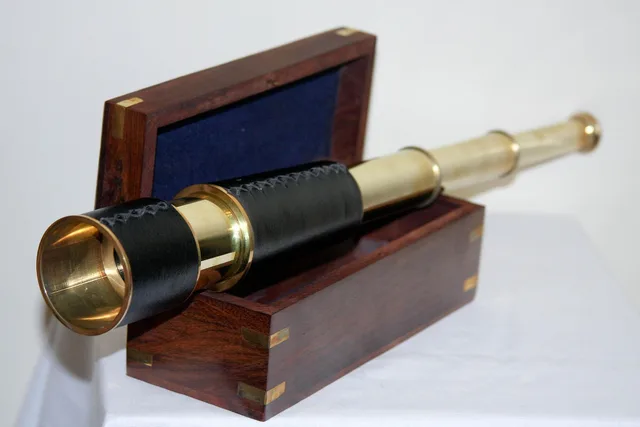
What does not change is the criteria that decide whether an instrument gets carried and used, or bought and abandoned. Judge any of the travel telescopes you are considering against these, against the designs that suit travel, and against what you want to look at. Then handle one before you pay.
What to take away
- The best travel telescope is the one you will carry, set up cold and use without help.
- Weight, setup time and packed size matter more than aperture on a trip.
- Small instruments do very well on the Moon and planets, and less well on faint objects.
- Try before buying if you possibly can, through a club or a loan scheme.
The criteria that matter on the road
| Criterion | Question to ask | Why it decides things |
|---|---|---|
| Packed size | Does it fit in the car with everything else? | Space is the first thing to run out |
| Weight | Can one person carry it in one trip? | Two trips in the dark means it stays home |
| Setup time | Under ten minutes, in the cold, by feel? | Setup eats observing hours |
| Stability | Does the image stop shaking quickly? | A wobbly mount ruins good optics |
| Power | Does it need mains, batteries, or nothing? | Cold kills batteries fast |
| Cool down | How long before images settle? | Larger instruments take longer |
Aperture appears nowhere in that table, which is deliberate. On a trip, a smaller instrument that is set up and pointed beats a larger one still in its case.
To apply the table to a real candidate, weigh it packed, with the mount, eyepieces and case, and time yourself setting it up with gloves on and a red light only. Those two numbers, measured by you, are worth more than any figure on a box.
Travel Telescope Criteria
- Packed sizefits in the car
- Weightone person, one trip
- Setup timeunder ten minutes
- Stabilityimage stops shaking quickly
- Powermains, batteries, or nothing
- Cool downhow long images settle
Designs and mounts that travel well
The design of a telescope settles most of the table before you look at any brand.
- Small refractor.A sealed lens tube that is ready almost at once and shrugs off knocks. Easy to carry, quick to cool, at its best on wide fields and bright targets.
- Maksutov-Cassegrain.A short, closed tube with a long focal length. Compact for its power and well suited to the Moon, planets and double stars, but slower to cool after a warm car.
- Tabletop Dobsonian.A small reflector on a simple rocking base. More light grasp for the money, but it needs a table, wall or tailgate to stand on and its open tube collects dew.
- Binoculars.No setup at all, and the widest view of the Milky Way.
Mounts matter as much as optics. A simple alt-azimuth mount moves up and down and side to side, and is the lightest and quickest to use. An equatorial mount tracks the sky more naturally but must be aligned on the pole, which adds weight and time. A GoTo or tracking mount finds objects for you but depends on batteries, which brings back the cold-weather row of the table.
Match the instrument to the targets
Decide what you want to see before you decide what to buy, and pick a theme to work through rather than a list of famous objects. The Moon and the bright planets are the natural strength of a small traveling instrument. They are also the most reliable targets, visible from ordinary skies and unaffected by moderate light pollution.
Bright vs Faint Targets
Bright targets
- Examples
- Moon, bright planets
- Reliability
- Most reliable
- Light pollution
- Unaffected
- What helps
- Small scope
Faint targets
- Examples
- Galaxies
- Reliability
- Very faint
- Light pollution
- Dark sky matters
- What helps
- Dark sky over magnification
NASA's overview of the planets is a reminder of how few there are to work through: eight planets and five officially recognized dwarf planets. The word planet traces back to a Greek term meaning wanderer.
Faint objects sit at the other end. NASA's galaxy basics says the largest galaxies hold trillions of stars and span over a million light years. The smallest hold a few thousand stars across a few hundred light years.
These objects are large but very faint, so dark sky matters more than magnification. A modest scope under a truly dark sky beats a large one in a suburb. The Moon decides the rest: plan galaxies and nebulae for the nights around new moon, and keep the Moon, planets and double stars for the bright nights of the same trip.
Try before you buy
Almost every regret in this area comes from buying without handling. Local astronomy clubs let members look through a range of instruments, and many run loan schemes. One evening at a club event will tell you more about what suits you than a month of reading specifications.
To find one, NASA's Night Sky Network is a nationwide coalition of amateur astronomy clubs that share their time and telescopes at public events, and it keeps a searchable calendar of upcoming events and clubs across the U.S. At an event, ask owners to set up their own travel instrument in front of you, and run the six tests from the table yourself.
If you are not ready for that, start with binoculars. They travel in hand luggage, need no setup, and show a great deal. Setup time is a real cost as well as a nuisance, and counting dark hours alongside money usually favors whatever is ready in two minutes.
Where a telescope fits in the trip
A telescope is an addition to a working night plan, not a substitute for one. Fit it into the packing and the schedule you already have, as described in what to pack when the trip is built around the night sky. Then price it honestly against the rest of the trip using our stargazing trip price guide.
Common questions
Is bigger always better?
What will a small telescope show?
Should I buy before my first trip?
Do I need a motorised mount?
In this guide
- Travel Telescopes Options by Type and a Stop for EachTravel telescopes options by type, from refractor to GoTo mount, each paired with a named park stop, plus cool-down, power, the Moon and seasonal road closures.
- Telescope trip planning for stargazing nights: add an hour, stay two nights, leave room to stopA telescope night needs an extra hour for setup, cool down and pack down. This covers staying two nights in one place, patient targets and leaving room to stop.
- Travel Telescopes Time: Seasonal Dark-Sky ChoicesTravel telescopes time: choose a certified dark-sky park by season, weigh night length and observing conditions, and use moon phase to pick dates.
- Unpacking travel telescopes packing list: packing downPacking for a telescope trip: protecting the instrument in transit, the small parts that end a night when lost, and what to watch while the optics cool down.