Maintenance
Charting stargazing travel mistakes: the one that causes most injuries
The recurring failure modes of stargazing travel, from unsafe solar viewing to dead phones on unlit roads, and the specific habit that prevents each one.
Stargazing trips fail in a few repeatable ways, none exotic. People look at the Sun unsafely, drive too far too late, arrive somewhere they cannot find in the dark, or chase a faint target on a bright night.
Each failure has a specific habit that prevents it. This catalog runs in rough order of how much harm each one can do.
What to take away
- Never look at the Sun without proper eclipse eye protection, and never through optics without a purpose made solar filter.
- Treat the drive home as part of the trip, and plan to sleep near the site.
- Assume no phone signal, and carry a downloaded map and a plan somebody else knows.
- Check the Moon before you commit to a faint target, not afterwards.
The one that can cause permanent harm
Solar observing is the only part of this hobby that can injure you in seconds. NASA's guidance on eclipse viewing safety is unambiguous: except during the brief total phase of a total solar eclipse, it is not safe to look directly at the Sun without specialized eye protection made for solar viewing.
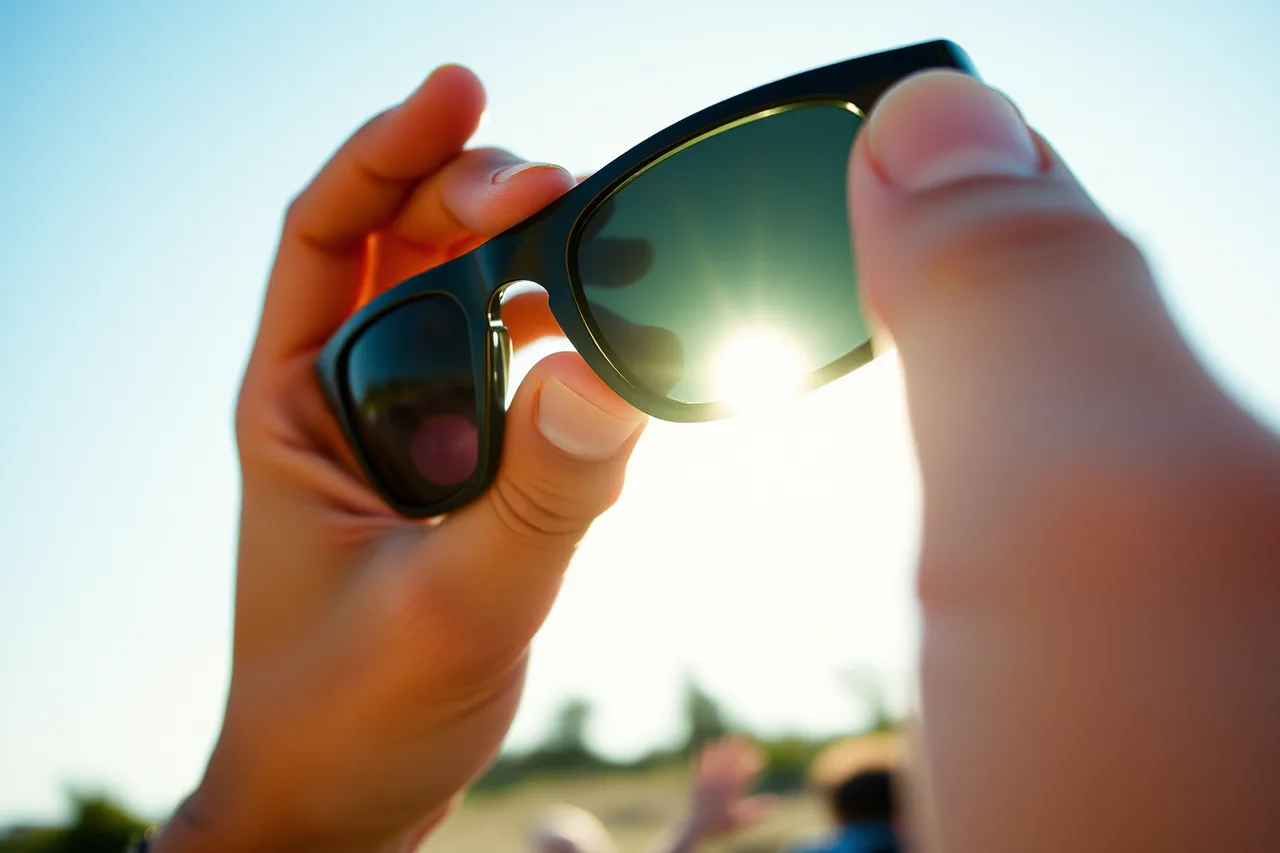
Viewing any part of the bright Sun through a camera lens, binoculars or a telescope without a purpose made solar filter fitted over the front of the optics will instantly cause severe eye injury.
NASA states eclipse glasses are not sunglasses. Safe solar viewers should meet the ISO 12312-2 standard, and damaged viewers should be discarded.
Never use eclipse glasses while looking through a camera, telescope, or binoculars, because concentrated light burns through the filter. Without a viewer, use an indirect method such as a pinhole projector, and do not look at the Sun through the pinhole.
Read that page before any daytime solar plan, including a casual look at a partial eclipse from a car park.
The one that causes most injuries
The drive. Long unlit roads, animals on the verge, and a driver who has been awake for twenty hours are a bad combination, and the risk peaks exactly when the observing has gone well.
The habit that fixes it is booking a bed near the site and setting a finish time before the session starts. A room twenty minutes closer also returns roughly forty minutes of darkness every night, so the safer choice is usually the more productive one as well.
The one that turns a problem into an emergency
Assuming the phone will work. Bandelier National Monument states plainly on its safety page that cell coverage is very limited inside the park and that visitors should not expect to depend on a phone in an emergency, listing the fixed phone locations instead.
The habit is to download the map, note where the nearest working phone is, and leave your route and return time with someone at home. All three belong in the final week of the planning countdown, alongside the forecast check and the road closures.
The ones that only cost you the night
- Planning a faint target on a bright Moon, which no equipment can rescue.
- Arriving in the dark at a site you have never seen in daylight.
- Bringing one light, one battery and one pair of gloves.
- Filling the daytime with a long hike, then being too tired to observe.
- Booking a single night, so cloud ends the trip rather than delaying it.
Each of these is avoidable with a decision made at the kitchen table. Most of them recur because the trip was planned in the wrong order, a problem addressed in planning stargazing trips.
Turning failures into a checklist
After each trip, write down what went wrong and the one line rule that would have prevented it. Within three or four trips you will have a personal checklist that is better than any published one, because it is built from your own mistakes. A starting set is collected in what first-time visitors miss.
Common questions
Can I look at the Sun through my telescope for a moment?
Are eclipse glasses enough with binoculars?
What is the most dangerous part of a night trip?
What single habit prevents the most trouble?
In this guide
- Stargazing travel mistakes cost dark-sky timeStargazing travel mistakes cost dark-sky time when plans depend on one night. Learn how moon phases, flexibility, gear, and a backup night protect a trip.
- What to Ask an Experienced Stargazing Guide and What They Cannot FixWhat to ask a stargazing guide to judge local experience, what a guide can and cannot fix, and how ranger programs and clubs offer similar knowledge at no cost.
- Stargazing travel mistakes accessibility: what to askStargazing travel mistakes accessibility can derail a night. Learn what U.S. standards cover and what to ask about access, altitude, cold, and viewing targets.
- A stargazing itinerary written backward from the usual mistakesTwo-day itinerary designed around the mistakes people make: a two-night plan written backwards from the usual failures, daylight arrival, no long hike.
- Stargazing Travel Mistakes: First Night on SiteStargazing travel mistakes tips for a first night on site: verify access, control vehicle lights, track moonrise and clouds, and choose a safe fallback.