Features
Stargazing Destinations on Navajo Land: Two National Monuments
Stargazing destinations on Navajo land: guide, permit and fee rules at Canyon de Chelly, free camping at Navajo National Monument, and etiquette after dark.
What to take away
- Stargazing destinations on Navajo Nation and Hopi lands require permits and cultural awareness, not just a dark sky map.
- Navajo Nation permits are mandatory for most visitors and photographers, under tribal park rules.
- At Canyon de Chelly the rim overlooks are open to you alone, but the canyon floor needs an authorized guide; Navajo National Monument has a campground open year round.
- Hopi reservation protocols restrict night access to villages and ceremonies; many areas are off limits after dark.
- Night sky stories are cultural knowledge, not content to share without permission.
- The IDA works with tribal communities on dark sky designations, but each nation sets its own terms.
- Leave No Trace and light discipline protect both the sky and the community.
Why stargazing destinations on tribal lands start with permission, not a map
A dark sky map shows where the stars are bright. It does not show who owns the land, who lives there, or what rules apply after sunset. In Arizona and New Mexico, many of the darkest skies sit over sovereign tribal nations.
The Navajo Nation and the Hopi Tribe govern their own lands. Entry and night use are privileges, not rights.
Treat the night sky as a cultural resource, not just a natural one, as the National Park Service explains in its guidance on night skies as a cultural resource. That framing changes how you plan. You ask first. You follow tribal rules. You accept that some places are closed to outsiders at night.
This is not red tape for its own sake. It is how tribal governments protect sacred sites, wildlife, and community privacy. NOAA tribal resources provide a starting point for understanding the federal tribal relationship, but they do not replace direct contact with the nation you plan to visit.
If you are new to this kind of travel, read what first-timers overlook before their first dark sky night. The same principles apply on tribal land, with added layers of permission and respect.
Navajo Nation permit rules for visitors and photographers
The Navajo Nation requires most non-Navajo visitors to obtain a permit for entry to tribal parks and recreation areas. Where a permit applies, it is not optional. Permits fund tribal services and help manage visitor impact. The two national monuments on Navajo land below work differently, and they are the easiest places to start.
Canyon de Chelly: what needs a guide and what does not
Canyon de Chelly National Monument, on Navajo land and managed with the Navajo Nation, shows how the rules split in practice:
- Fees.There is no entrance fee at Canyon de Chelly, and the overlooks are yours to visit on your own. Navajo Nation Parks and Recreation issues backcountry permits and manages Cottonwood Campground; its office at the campground entrance collects the fees for both, and the number for questions is 928-674-2106.
- Rim drives.Driving to the overlooks on the North and South Rim Drives is self-guided and needs no guide or permit. The roads are paved, and the drives are open all year.
- The canyon floor.Under federal regulation 36 CFR 7.19, visitors may not enter the canyons unless accompanied by a park ranger or an authorized guide. Every authorized guide needs a permit from the Superintendent.
- The one exception.The White House Trail is the only public trail in the park that can be hiked without a permit or guide.
- Tours.Commercial tour companies need a tour guide business permit from the Navajo Nation Parks and Recreation Department, and each tour vehicle entering the canyon needs a backcountry permit. Navajo Nation Code, Title 5, Section 2501 and following, regulates tour operators and guides across the Nation.
- Booking a guide.Travel into the canyon is arranged through an approved and registered tour company, so ask any operator to show its Navajo Nation tour guide business permit before you book.
- Camping.Cottonwood Campground is run by the Navajo Parks and Recreation Department on a first-come, first-served basis.
For stargazers, that means the rim overlooks are the place to set up on your own, and any night in the canyon itself is a guided trip.
Navajo National Monument: a night at camp on Navajo land
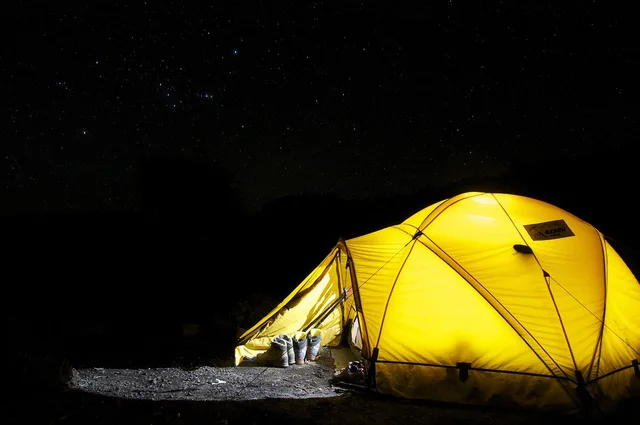
Navajo National Monument sits within the Navajo Nation in northeastern Arizona, protecting the Betatakin, Keet Seel and Inscription House cliff dwellings. It is a non-fee park, and its two campgrounds are free. Its self-guided trails are open only until sunset, so the night is spent at camp rather than on the trails. Two campgrounds are available on a first-come basis: Sunset View is open year round, while Canyon View closes for the winter. Drones are not permitted within the monument's boundaries.
Navajo Nation Permit Rules
General Visitor
- Entry Permit
- Required
- Photography Permit
- Not needed
- Guide
- Sometimes
- Night Access
- Check park
- Drone Use
- Prohibited
- Alcohol/Drugs
- Banned
Photographer
- Entry Permit
- Required
- Photography Permit
- Separate permit
- Guide
- May be required
- Night Access
- Often restricted
- Drone Use
- Prohibited
- Alcohol/Drugs
- Banned
For photographers, the rules are stricter. Commercial photography and film permits are separate from general entry permits. You need advance approval, and you may need a Navajo guide. Check with the Navajo Nation Parks and Recreation Department before you plan any shoot.
Camping overnight usually requires its own permit. Do not assume a day visit covers night access. Ask specifically about stargazing and after-dark hours.
Drone use is prohibited on Navajo Nation land without explicit permission, and the Canyon de Chelly guidance adds that drones are not permitted inside national parks. The FAA regulates airspace, but tribal law governs the ground. Flying a drone at night over tribal land without authorization can lead to confiscation and fines.
Alcohol and drugs are banned on Navajo Nation land. This applies to visitors and to any stargazing gathering. Respect the law and keep your group sober.
For more on sorting real night sky destinations from rumors, see our category-by-category guide.
If your route crosses Hopi land: what is off limits at night
The Hopi villages sit on three mesas in northern Arizona. First Mesa holds Walpi, the oldest village there, with Hano and Sichomovi; Second Mesa holds Shongopavi, Mishongnovi and Shipaulovi; Third Mesa holds Oraibi, Hotevilla and Bacavi, with Kykotsmovi, also called New Oraibi, below it. These are homes, not viewpoints, and none of them is a stargazing destination for outsiders.
The Hopi reservation is more restrictive than the Navajo Nation for outside visitors. The Hopi Tribe does not have a general visitor permit for unrestricted travel. Most visits require an escort or a guide from a specific village. Night access is even more limited.
Many Hopi villages close to outsiders at night. Ceremonies, some of which involve night sky observations, are not public events. Do not assume you can attend or photograph a ceremony. If you are invited, follow the host's instructions exactly. No photography, no recording, no sharing without permission. A camera on a tripod pointed at the sky over a village counts.
Some mesas and archaeological sites are sacred and closed entirely. Others allow day visits but not overnight stays. The Hopi Cultural Preservation Office can clarify what is allowed, but you should contact them well in advance. Do not show up at a village gate after dark and ask for access.
If you are looking for local guides for dark sky travel, choose operators with established relationships with tribal communities. They can help you follow protocols and avoid accidental disrespect.
Night sky stories as cultural knowledge, not content
For many tribal nations, the night sky is not just a backdrop for stargazing. Stars, constellations, and celestial events carry stories, teachings, and ceremonial significance. These are living traditions, not folklore for entertainment.
Some knowledge is public. Some is shared only within the community. Some is restricted by season, gender, or initiation. You cannot know which is which without being told. The safe approach is to listen more than you record.
Do not post tribal stories, songs, or images on social media without explicit permission. Even if you hear a story from a guide, that does not mean it is yours to share. Ask before you photograph people, ceremonies, or sacred sites. When in doubt, leave the camera off.
Night skies are a natural resource on protected lands, as the National Park Service notes in its overview of night skies as a natural resource. On tribal lands, they are also a cultural resource. Treat both with care.
How the IDA works with tribal communities on dark sky designations
The International Dark-Sky Association (IDA) certifies dark sky places around the world. Designations include Dark Sky Parks, Sanctuaries, and Reserves. In the United States, the IDA works with land managers, including tribal governments, to recognize and protect night skies.
A tribal dark sky designation is not imposed from outside. It comes at the invitation of the tribal nation. The IDA provides technical assistance, lighting assessments, and guidance on outdoor lighting policy. The tribe retains sovereignty over its land and decides what a designation means for visitors.
Arizona and New Mexico hold a cluster of certified dark sky places, and the IDA adapts its review to each applicant's own lighting rules. Not every tribal nation wants that label.
Some prefer to protect their skies without outside certification, while others seek designation to support tourism or strengthen lighting ordinances. Either way, the decision rests with the tribe.
The National Park Service partners with tribes and other organizations on night sky protection, as described in its partnerships overview. These partnerships can support tribal-led efforts without overriding tribal authority.
If you want to visit a tribal dark sky place, check the IDA's list of certified places and then verify access rules directly with the tribe. A designation does not automatically mean public night access.
Leave No Trace and light discipline on tribal land
Leave No Trace guidance applies everywhere outdoors, but on tribal land it carries extra weight. You are a guest on someone's homeland. Your actions reflect on all visitors who come after you.
Respectful Night Out Checklist
- Confirm tribal permit and carry it
- Check if night access is allowed
- Use only red-light flashlights
- Pack out all waste and batteries
- Stay on designated roads and trails
- Respect quiet hours and keep voices low
The dry air over much of Arizona and New Mexico produces some of the clearest night skies in the country, which is exactly why light discipline matters here.
Light discipline is part of that. Use red-light flashlights only. Keep white light off unless absolutely necessary. Shield any light you must use. Do not use bright lanterns or vehicle headlights in areas where they can disturb wildlife, livestock, or residents.
Pack out everything you bring in. This includes food waste, wrappers, and batteries. Do not leave markers, cairns, or art. Do not collect rocks, plants, or artifacts. Federal and tribal laws protect archaeological and cultural items.
Stay on designated roads and trails. Driving off-road damages fragile desert crust and can disturb sacred sites. If you are unsure whether a road is open, ask before you drive it.
Respect quiet hours. Sound travels far at night. Keep voices low, avoid loud music, and leave pets at home unless they are permitted and under control.
Here is a quick checklist for a respectful night out:
- Confirm whether you need a tribal permit and carry it with you.
- Check if night access is allowed in your specific area.
- Use only red-light flashlights and shield any white light.
- Pack out all trash, including food scraps and batteries.
- Do not photograph people, ceremonies, or sacred sites without permission.
- Stay on designated roads and trails.
- Keep noise to a minimum and respect quiet hours.
If you need accessible options for stargazing, ask about paved viewing areas and vehicle access before you go. Not all tribal sites have them.
Planning a visit that respects both the sky and the community
Start with research. Decide which tribal nation you want to visit. Then go to the source: the tribe's parks and recreation department, cultural preservation office, or tourism office. Do not rely on third-party blogs for rules. They may be outdated or wrong.
Planning a Navajo Nation Visit
- Choose a specific area with night sky access
- Contact Navajo Nation Parks and Recreation
- Apply for photography permit if needed
- Book legal campsite or lodging
- Check in with local officials on arrival
- Use red light and leave no trace at night
- Do not share stories or images without permission
Here is a worked example for a trip to the Navajo Nation near Flagstaff, Arizona:
- Choose a specific area, such as Canyon de Chelly or a Navajo Tribal Park with known night sky access.
- Contact Navajo Nation Parks and Recreation to confirm permit requirements and whether night access is allowed.
- If you plan to photograph, apply for a commercial photography permit and hire a Navajo guide if required.
- Book a campsite or lodging that is legally open to visitors and has minimal lighting.
- On arrival, check in with local officials, show your permit, and ask about any temporary closures or cultural restrictions.
- At night, use red light only, stay in permitted areas, and leave no trace.
- After your trip, do not share stories, images, or locations that could violate tribal protocols.
For a broader look at how to plan dark sky travel, including seasons and regulations, see our honest guide.
Timing matters. Summer brings monsoon clouds to New Mexico and Arizona, but also warmer nights. Winter offers clearer skies but colder temperatures and snow at higher elevations. Check moon phase and weather before you go. A full moon washes out the Milky Way.
Go with a guide when possible. Tribal guides provide context, keep you within boundaries, and help you understand what you are seeing. They also ensure your money supports the local community.
Finally, be patient. Tribal rules may change with little notice. A road may close for a ceremony. A site may be off limits for the season. Accept these changes without argument. The sky will still be there next time.