Maintenance
Part of Charting stargazing travel mistakes: the one that causes most injuries
Stargazing Travel Mistakes: First Night on Site
Stargazing travel mistakes tips for a first night on site: verify access, control vehicle lights, track moonrise and clouds, and choose a safe fallback.
The stargazing travel mistakes that matter after you reach a dark-sky site often involve the place itself: assuming a certified site is open, bringing road lighting into the viewing area, or reacting to clouds by driving somewhere unfamiliar.
This first-night guide focuses on decisions you make on site: confirm access with the managing authority, keep lights from disrupting other visitors, and decide how to respond when moonlight or weather changes the view.
Mistake: assuming certification means all-night access
A dark-sky designation is not an after-hours pass. Voyageurs National Park is an International Dark Sky Park, but visitors still need to follow the park's access conditions.
DarkSky International's International Dark Sky Places directory can help identify designated places; check the site manager's own rules for whether the area you plan to use is open and whether permits or reservations apply.
For a National Park Service site such as Voyageurs, consult its official Operating Hours & Seasons information and Superintendent's Compendium for current hours, closures, and restrictions. Do this before you head to a remote viewing area.
Don't treat a roadside pullout or closed gate as permission to find a different place nearby. If access is not clear, contact the managing authority rather than improvising after dark.
Mistake: using travel lights as viewing lights
Headlights that are useful for parking can be disruptive once people are observing. Park only where allowed, finish unloading, and switch off the vehicle's lights when it is safely stationary.
Never compromise driving safety to protect night vision: use your headlights while driving, then avoid leaving them pointed across a viewing area when parked.
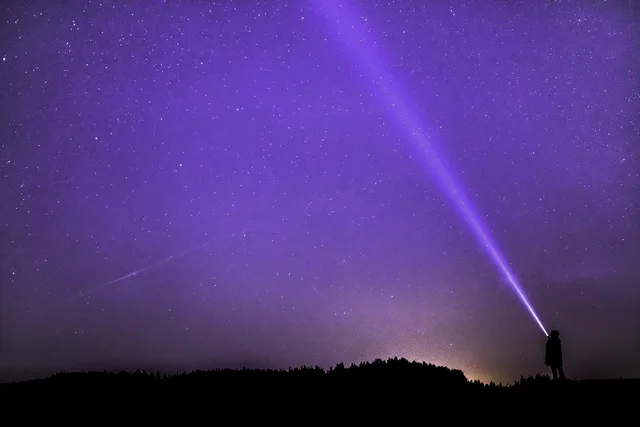
If you need a handheld light, use a red setting if available and point the beam at the ground near your feet, not across other people's sightlines. Avoid repeatedly sweeping a white beam around to find items.
The National Park Service's Stargazing 101 page says white light from flashlights, cell phones or vehicle headlights can harm your night vision, and that a red light is much better for stargazing.
The aim is considerate light use in the observing area, not setting up a complicated kit. Photographers carrying more gear can start from a camera kit checklist.
Mistake: treating the sky as if it will stay the same
A dark location does not guarantee a clear view all night. Use the forecast on the day to check cloud cover and weather hazards, then compare it with what you see from the permitted viewing area.
A forecast is not a promise that conditions will hold. Southwest monsoon and smoke seasons are additional reasons to build flexibility into a trip in that region.
Moonlight can also change during a session. Check local moonrise and moonset times for your date and location so you know whether the Moon is likely to rise or set while you are there. This is an on-site timing question, not just a matter of the Moon's phase.
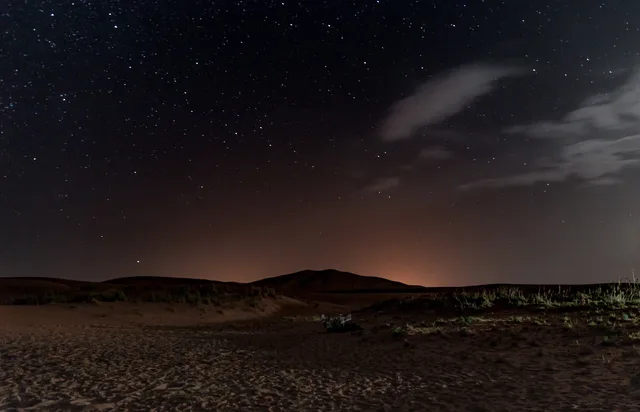
A light-pollution map or Bortle rating describes background sky darkness; it does not tell you whether tonight's viewing area is cloudy or open.
Mistake: chasing a patch of clear sky in the dark
When clouds move in, driving to an unfamiliar overlook can add road, access, and footing risks without improving the view.
Decide in advance what you will do if the sky closes: pause only if your location remains safe, or end the session and return by a route you already know. Voyageurs National Park's safety pages note that park weather can change rapidly at any time of year.
Weather margin decision
Is the site near water or at elevation?
weather changes rapidly, carry extra warm layer
still check forecast on the day
Treat a change in the sky as a reason to reassess, not as a reason to wander. If weather creates an immediate safety concern, stop observing and follow the site's instructions. A clear route back and a known place to leave from are more useful than an improvised search for a better view.
A two-day itinerary written around these mistakes plans both in advance.
A short first-night sequence
When you reach the viewing area, use this order:
- Confirm that the area is open and that you are following its access rules.
- Park legally and safely; once stationary, keep vehicle lights from shining into the viewing area.
- Check the local forecast and note the Moon's rise or set time for your location.
- Observe from the permitted area and reassess if clouds or weather change.
- If conditions become unsafe, leave by the route you already know rather than driving off to find a new spot.
These steps keep the first night focused on using the site responsibly. The view may change; your access plan and safe way back should not depend on guessing what happens next.
Other first-time visitor gaps, such as cold and the drive home, are worth reading before the trip.