Guides
RV camping and stargazing rules in national parks compared with BLM land
RV stargazing splits into two rulebooks: national park campgrounds with reservations and generator hours, or BLM dispersed camping with fewer limits.
What to take away
- Two agencies, two rulebooks. A night in a National Park Service campground and a night on Bureau of Land Management land are governed by different manuals, different fees and different expectations.
- Generator hours are the sharpest split. Park campgrounds post a morning window and an evening window with generators off overnight; dispersed BLM sites usually post nothing, so noise is your call and your neighbor's problem.
- Light shielding is a rule in most park campgrounds and a courtesy on BLM land. The fixture is the same either way: a hood or recessed bulb that throws light down, not up.
- The America the Beautiful pass covers entrance fees, not nightly site fees in most park campgrounds. On BLM land, passes matter mainly at developed recreation sites.
- Named starting pointsDevils Garden in Arches and Mather at Grand Canyon for park pads; Valley of the Gods and Grand Staircase-Escalante for BLM land.
Two rulebooks, one week
The National Park Service runs campgrounds inside park boundaries: numbered sites, defined pads, restrooms, a camp host. The Bureau of Land Management oversees vast tracts, mostly in the West, where you may camp outside developed campgrounds on much of the land.
Those are not variations on a theme. They are separate systems with separate fee structures, separate stay limits and separate ideas about who enforces what.
Arizona, Utah, California, Colorado and New Mexico hold large blocks of BLM land, and several of those states also contain park units with certified dark skies. That overlap is why so many stargazing RV trips cross from one system to the other inside a single week.
You might spend two nights on a reserved pad, then move to open desert where nobody assigns you anything. Nevada and Texas add options. Hawaii does not: the state has limited BLM acreage, so a dark-sky RV trip there means a park, a state site or private land.
The BLM publishes its own camping rules and its own recreation pages, which is the clearest place to start on the split (Camping | Bureau of Land Management, Recreation and Visitor Services | Bureau of Land Management).
Park campgrounds: reservations, pads and posted quiet hours
Most established park campgrounds take reservations through Recreation.gov, and the popular dark-sky units in Utah and Arizona book months ahead. You pay a nightly site fee, and in many parks an entrance fee on top or a pass at the gate.
Typical nightly site fees run about $20 to $40, with simple dry sites lower and full-hookup sites higher. Entrance fees at the large western dark-sky parks usually run $20 to $35 per vehicle for seven days. The annual America the Beautiful pass costs $80.
Named examples include Devils Garden Campground in Arches National Park, Utah, and Mather Campground at Grand Canyon National Park, Arizona. Natural Bridges National Monument, the first International Dark Sky Park, runs a small campground with no hookups.
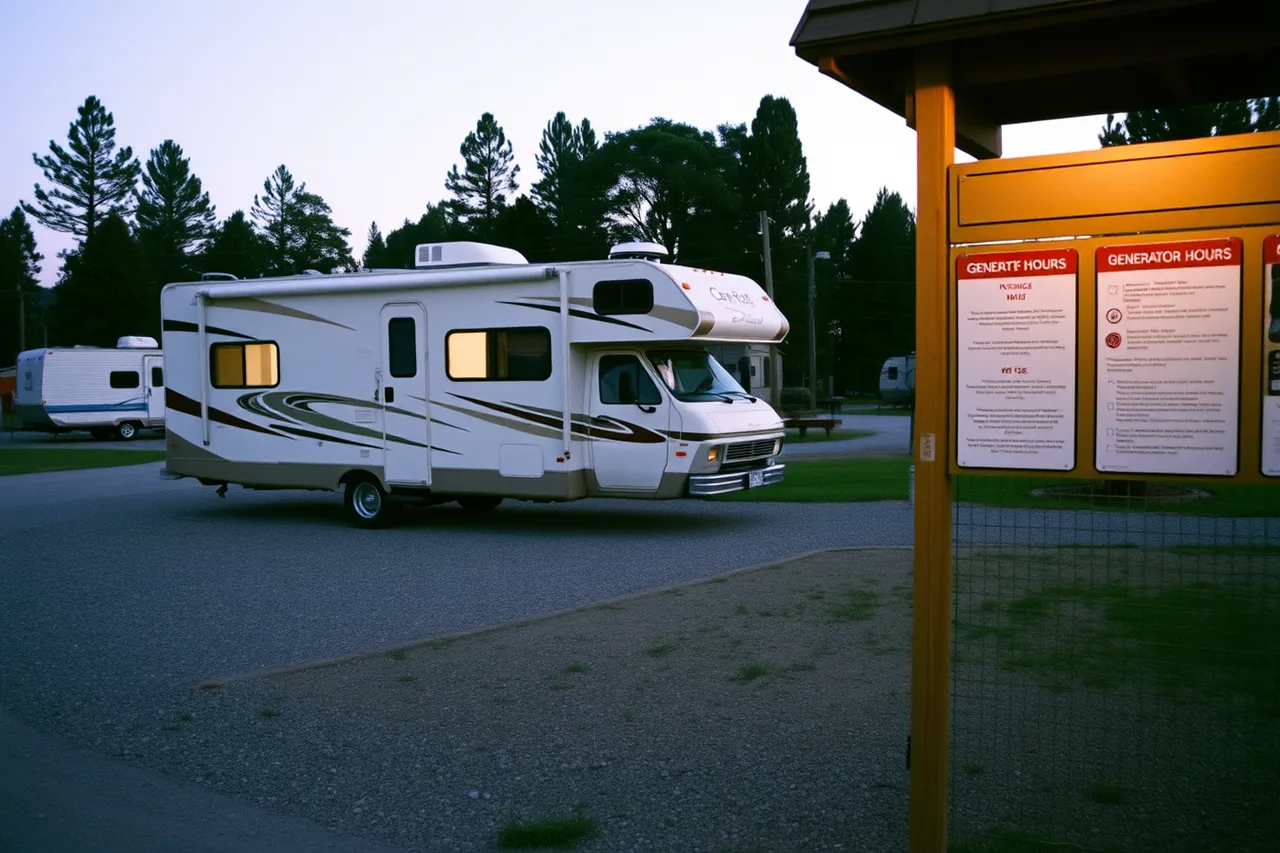
Sites are numbered. Pads are defined. A camp host or ranger checks that you stay inside your assigned space, which matters more than it sounds when you arrive after dark and the next pad over is already occupied.
Generator hours are posted at the entrance station and again on your site information. The common pattern is a morning window and an evening window, usually about 8 a.m. to 10 a.m. and 5 p.m. to 8 p.m., with generators off overnight. Some loops ban them outright.
If you run a built-in generator for air conditioning or battery charging, read the posted schedule before you plug in. Quiet hours cover more than generators: music, idling engines and loud conversation fall under the same rule.
For a stargazing trip that structure is an advantage. The campground goes dark and quiet at a predictable hour, which is exactly when you want to set up a telescope.
RV limits are the part people miss. Many park campgrounds cap rig length, restrict slide-outs on narrow loops, and offer only a handful of full-hookup sites. Dump stations are often seasonal. A site that fits a 25-foot trailer may not fit a 40-foot motorhome, so check the individual campground page before booking.
Campfire rules vary by park and by season. Our guide to dark sky parks camping us tracks which units allow fires and which ban them outright.
BLM dispersed camping: free, spread out, unmanaged
On most BLM land you may camp outside developed campgrounds, usually free, typically limited to 14 days in one spot. No reservation, no assigned site, often no restroom, water or trash service.
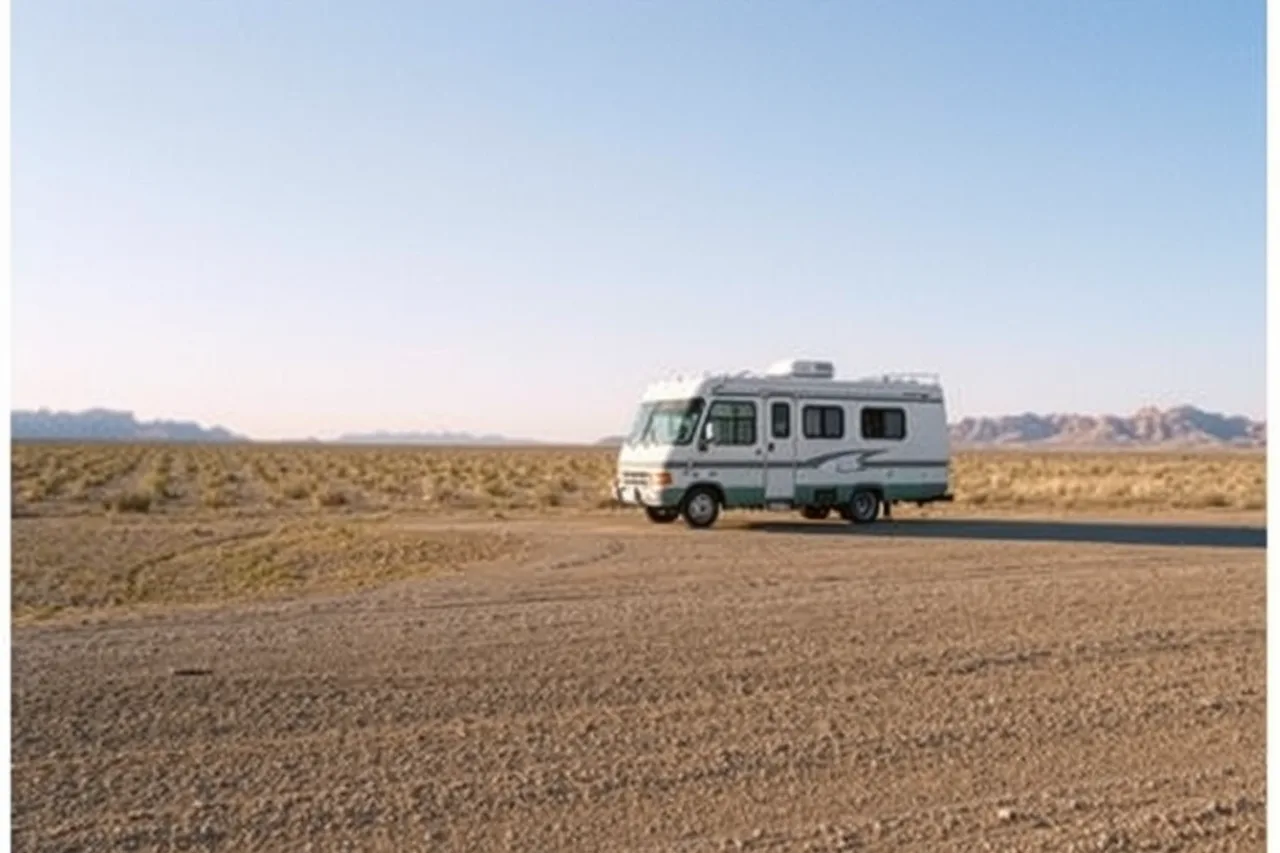
You find a flat spot off the road, park, and that is camp.
Two named areas show the range. Valley of the Gods, near Mexican Hat, Utah, sits in the BLM Monticello Field Office and allows dispersed camping along its gravel loop. Grand Staircase-Escalante National Monument, managed by the Kanab and Escalante field offices, allows dispersed camping away from closed sites and developed areas.
Developed BLM campgrounds usually charge about $5 to $20 a night. Long-term visitor areas, such as La Posa near Quartzsite, Arizona, in the Yuma Field Office, sell a seasonal permit instead of nightly fees.
The tradeoff is silence. Dispersed sites in Nevada, Utah and New Mexico can sit miles from the nearest paved road, which is the whole appeal. Fewer people means fewer headlights and less generator drone. It also means you own your waste, your water and your safety.
The BLM expects you to know the local rules before you arrive. Its Know Before You Go guidance covers road conditions, fire restrictions and stay limits that change by field office (Know Before You Go | Bureau of Land Management). Camping and land-use rules sit inside the agency's broader regulatory framework (Laws and Regulations | Bureau of Land Management).
Not all BLM land is open to dispersed camping. Some areas close for wildlife, mining claims, cultural sites or safety. Others require a designated site. Check the field office map or call ahead, because a gate or a sign is the final word, not a website.
Access roads are the other variable. A graded gravel road may be fine for a Class C; a two-track wash may not. After rain, clay soils in parts of Utah and Nevada turn impassable. Ask locally about current conditions rather than trusting a dry-season memory.
For how Colorado's public lands actually rank for darkness, see our ranking of Colorado dark sky parks.
Light shielding: enforced in parks, expected on BLM land
A shielded fixture has a hood or a recessed bulb that throws light onto the ground instead of into the sky. It is the single cheapest piece of dark-sky equipment you can own, and it costs less than a tank of fuel.
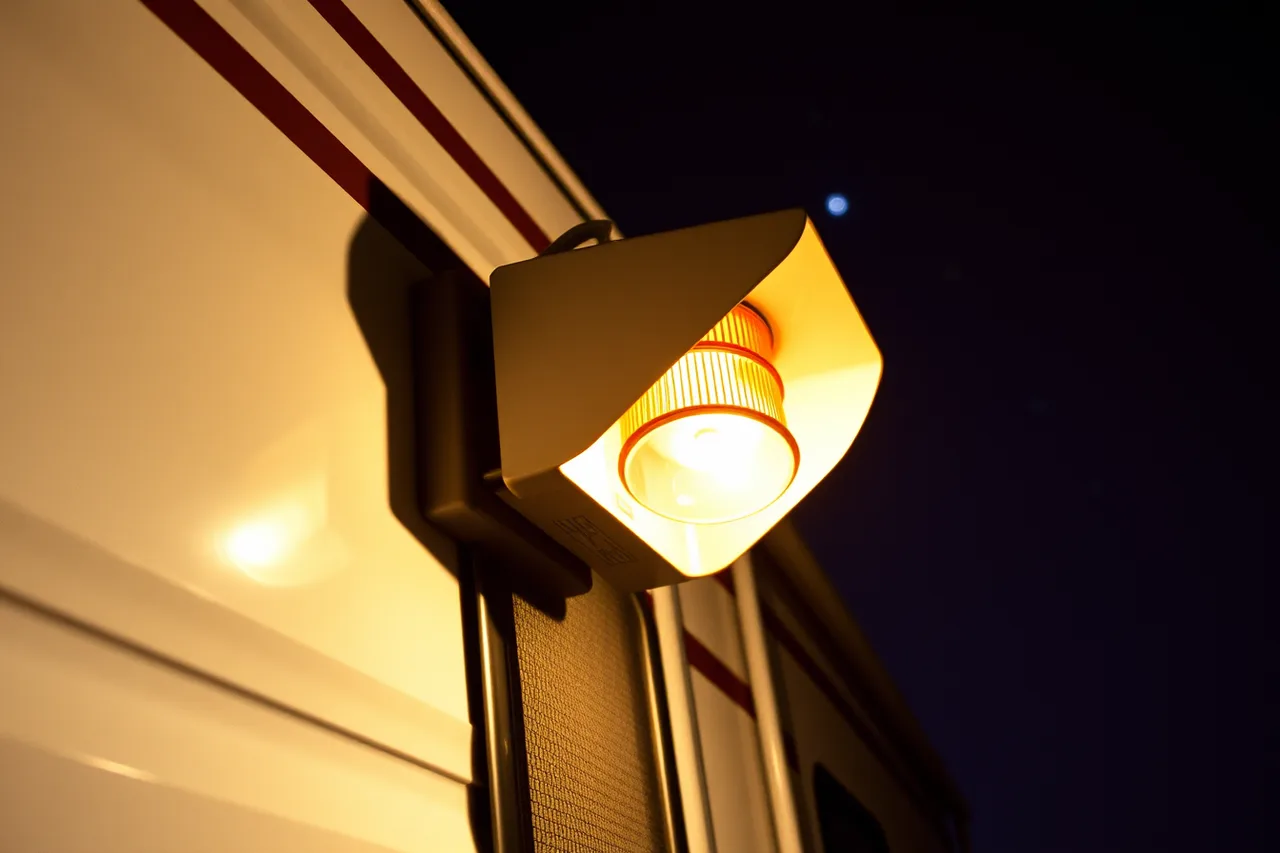
In park campgrounds, shielding is often written into the rules. Some parks require shielded fixtures on RVs and ban unshielded porch lights after quiet hours. A ranger can ask you to kill a light that spills into other sites or straight up.
Enforcement is uneven, but the authority exists.
On BLM land, shielding is mostly voluntary. You will rarely find a posted fixture requirement at a dispersed site. The expectation comes from Leave No Trace guidance and from the people camped nearby, some of whom drove hours for darkness. An unshielded floodlight ruins that for everyone within sight of it.
The fix is cheap. Replace or cover exterior bulbs, switch to amber or red for tasks after dark, and aim any necessary light at the ground. Red light also preserves your own night vision, which is the point if you plan to observe.
Certification adds a layer. The International Dark-Sky Association recognizes parks and other places that meet lighting and outreach standards, so in certified units you may find fixture requirements in campgrounds and at visitor centers. On adjacent BLM land the same standard is encouraged, not mandated.
When in doubt, shield it.
Fees, passes and what a night actually costs
This is where the two systems diverge most, and the gap is wide enough to shape a trip budget.
NPS campground
- Nightly site fee
- Usually charged, varies by park
- Reservation
- Often required, Recreation.gov
- Entrance fee
- Often charged per vehicle
- Stay limit
- Set by campground permit
- Hookups
- Some sites, limited
- Dump station
- Often available, may be seasonal
- Pass effect
- Covers entrance, not site fee
BLM dispersed camping
- Nightly site fee
- Usually free
- Reservation
- Not required
- Entrance fee
- Not applicable
- Stay limit
- Typically 14 days in one spot
- Hookups
- None
- Dump station
- Rare
- Pass effect
- Covers fees at some developed sites
A free site thirty miles down a wash can cost more in fuel and time than a paid pad with a dump station.
The America the Beautiful pass covers entrance fees at federal lands, including national parks, but not nightly campground fees in most parks. On BLM land, passes matter mainly at developed recreation sites rather than dispersed camps. The BLM explains which passes apply where and how to buy them (Recreation Passes | Bureau of Land Management).
For a line-by-line look at what a stargazing weekend really costs, including fuel and food, see our breakdown of a two-night dark sky weekend.
Leave No Trace at a night sky camp
Leave No Trace is seven principles from the Leave No Trace Center for Outdoor Ethics. They apply on both park and BLM land, but they carry more weight where there is no host, no dumpster and no ranger.
At a dispersed site, the principles are the only management system present.
Use this checklist before you pull out:
- All trash and food scraps packed out, including bottle caps and zip ties
- Gray water and black water contained, never dumped on the ground
- Fire fully out and ashes cold to the touch
- Generator off during quiet hours and overnight
- Exterior lights off or shielded when not needed
- Site left as found, with no new fire rings or trenches
- Tracks and tire ruts avoided on wet ground
Camping on durable surfaces means using an existing site or a hardened pad rather than crushing new vegetation. In desert country a tire track through cryptobiotic soil can last for years. In forest, driving off the road damages roots and starts erosion. Park on gravel, rock or ground someone already used.
Be considerate of others has an obvious night-sky meaning. Sound carries in open country, and so does light. A generator after dark or a bright porch light can end the evening for someone a quarter mile away. Assume you are never alone, even when you cannot see anyone.
If you are new to packing for this kind of trip, our night sky destinations packing list covers the clothing and comfort items that matter more than gear.
Choosing between a park pad and BLM land
Pick a park campground when you want certainty. Reserved site, defined pad, restrooms, often a dump station, rangers who keep order. You also get other campers, which means some light and some noise. For a first dark-sky trip, or a trip with family on a schedule, the park system is easier to plan around.
Pick BLM dispersed camping when you want silence and space. Free camping, wide horizons, a real chance at being alone under a dark sky. You give up services, reservations and any guarantee the road will be passable. That suits experienced RV owners who carry water, manage waste and can change plans when a road washes out.
A hybrid trip often works best. Two nights on a park pad to reset and dump tanks, then out to BLM land for the new moon.
In Utah, for example, book a park site near a certified dark-sky unit, then drive to nearby BLM land for the darkest nights.
Season changes the math. Summer brings crowds and fire restrictions to both systems. Winter closes some park campgrounds and makes some BLM roads impassable. Spring and fall usually give open roads, comfortable nights and fewer people, which is also when dark skies come early enough to enjoy without waiting for a late sunset.
Whatever you choose, check current conditions, know the stay limit, and arrive before dark. Setting up an RV by headlamp is a poor start to a stargazing night. If your trip crosses into Canada, our guide to tent camping in Ontario's dark-sky preserves covers a different set of rules entirely.
Common questions
Can I camp overnight in my RV on BLM land for free?
On most BLM land, dispersed camping is free and typically limited to 14 days in one spot. Services are minimal, so plan to carry in water and pack out waste. Some areas are closed or require a designated site, so check the field office map first.
Are generators allowed in National Park Service campgrounds?
Usually yes, but only during posted generator hours, with generators off overnight. Some loops ban them entirely. Read the schedule at the entrance station and on your site information before you plug in.
Do I need a reservation for a park campground in a dark-sky park?
Most established park campgrounds take reservations through Recreation.gov, and popular dark-sky units book months ahead. A few first-come sites exist, but they are unreliable in peak season.
Is light shielding required on BLM land?
Rarely as a posted rule. It is expected under Leave No Trace guidance and by other campers, so shield exterior lights and use red light after dark. In certified park units you may find it written into campground rules instead.