Maintenance
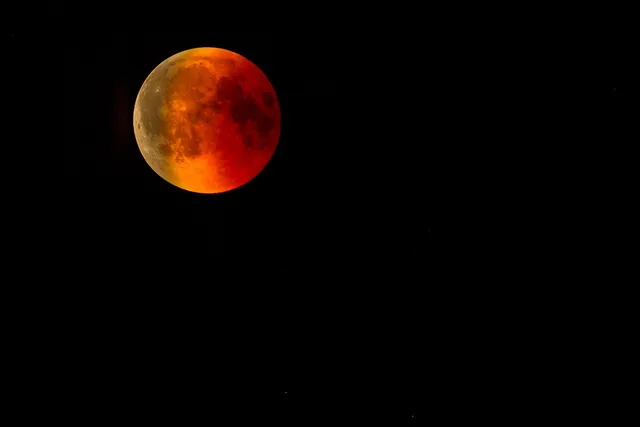
Part of Handling dark sky trip case studies step by step: case two: the lunar eclipse that worked
Framing dark sky trip case studies tips: expectations, set honestly
Dark sky trip case studies tips: choose a modest first target, plan around the Moon, know real meteor rates, finish early, and write the night down.
Reading back across the dark sky trip case studies in this cluster, the first visits that went well shared a set of unglamorous habits. Nobody set out to see something rare. Everybody arrived in daylight. Everybody stopped before they were exhausted. And in each case somebody wrote down what happened afterwards, which is why the second trip was better than the first.
What to take away
- Choose a modest target for a first visit and let anything else be a bonus.
- Check the Moon before you bookthe phase changes a site more than the drive does.
- Understand what the published meteor rates actually describe before you use them.
- Finish early on a first night. Nothing is gained by staying out until you are cold and tired.
- Write it down afterwards, because the record is what improves the next trip.
The sites behind these tips
These tips are easiest to check against three certified places, each named by DarkSky International, formerly the International Dark-Sky Association, the body that runs the International Dark Sky Places program.
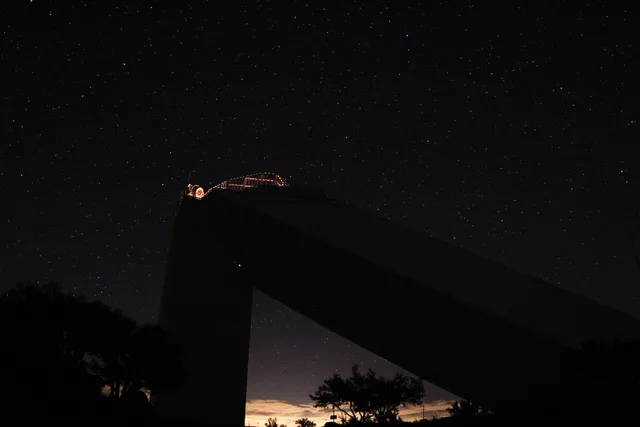
- Natural Bridges National Monument, Utahthe world's first International Dark Sky Park, certified in 2007.
- Cherry Springs State Park, Pennsylvaniaan International Dark Sky Park with a dedicated astronomy field inside Susquehannock State Forest.
- Death Valley National Park, California and Nevadaan International Dark Sky Park and the largest national park in the contiguous United States.
Dark Sky Park is one label among several: the same program also certifies Dark Sky Reserves, Dark Sky Sanctuaries and Dark Sky Communities, so it is worth knowing which one you are visiting.
Pick a target that cannot really fail
The Moon, a bright planet, a well known star pattern, or the general fact of a dark sky itself. All four are available on most clear nights and none of them depends on an event. A two-night plan that gives every block one of them as a fallback is in an itinerary rebuilt from what the case studies taught.
First trip targets: safe vs risky
Reliable fallback
- Availability
- Most clear nights
- Depends on
- Nothing rare
- Best for
- First visit
- Examples
- Moon, planet, stars
Rare event
- Availability
- Fixed date only
- Depends on
- Several things at once
- Best for
- Second or third trip
- Examples
- Shower peak, aurora, eclipse
First visits that went badly were almost always built around something rare: a specific shower peak, an aurora, an eclipse from a single location. Those are excellent second or third trips and poor first ones. They combine a fixed date with a target that only appears if several things go right at once.
Save them until you know how your group behaves in the cold at midnight. The habits that make a first night work — starting with arriving with enough light to see the ground, and ending with kit packed in daylight — are worth adopting before the trip rather than after it.
Check the Moon before you book
The phase of the Moon changes a site more than any other single factor. Around a new Moon the sky is at its darkest, which is when faint targets such as the Milky Way are within reach; a bright gibbous or full Moon washes out everything except the brightest stars, the planets and the Moon itself.
The Moon also rises later each night, so the same park can be excellent early in the week and disappointing later on. If your dates are fixed and the Moon will be up, make the Moon the target and plan the next trip around a new Moon.
Understand the vocabulary before you use it
Published figures are easy to misread, so it helps to know what the words mean. NASA's overview of meteors and meteorites sets the distinctions out cleanly.
Meteor vocabulary, plainly
Term
- Meteoroid
- Small rocky, still in space
- Meteor
- Bright streak in atmosphere
- Meteorite
- Survives to hit ground
- Meteor shower
- Several meteors an hour
What it means
- Meteoroid
- Meteor
- Meteorite
- Meteor shower
Several an hour is the honest baseline for an ordinary clear night with no shower at all. Published shower rates assume dark skies with the radiant high overhead, so they describe a best case, not a forecast for your site and your hour.
Expectations, set honestly
Even a well regarded shower gives casual observers few meteors, and NASA's Eta Aquariids page is a fair example. The shower comes from comet 1P Halley and radiates from Aquarius.
In 2027 it is active from April 19 to May 28, peaking the night of May 5 to 6. Under dark skies it yields about 10 meteors per hour at 40.7 miles per second.
Ten an hour, seen from a chair with a blanket, is a lovely evening. Ten an hour, expected to be a spectacle, is a disappointment. The expectation is the only variable you control, so say the number out loud to everybody in the group before you leave the house.
Clothing and kit, named
The first nights that ended early ended because of clothing, not instruments. This is the short list that actually gets used on a dark sky night:
- A red flashlight, or a headlamp with a red mode, so your eyes keep their dark adaptation.
- Layers, a warm hat and gloves, even in spring and fall, because the temperature drops once the Sun is down.
- A folding chair or a blanket, so you can sit and look up instead of standing and shivering.
- A thermos, plus food you can eat with gloves on.
- A printed star chart or an offline app, and a charged power bank, since signal at a dark site is unreliable.
- A note of where the car is parked, and a way to walk back to it without switching on a white light.
Finish early, then write it down
Stop the first night sooner than you want. Next morning, write half a page: where you went, the conditions, what you saw, what you wished you had brought. That record turns a first visit into a second that works properly.
The beginner list is in what first-time visitors miss, and the worked trips behind these lessons are in dark sky trip case studies.