Guides
Colorado Dark Sky Parks: Reported Sky Quality and How to Choose One
Four Colorado dark sky parks with their reported Bortle classes, what makes each one dark, and how to choose among them for a stargazing trip.
What to take away
- Great Sand Dunes National Park and Preserve is the darkest park ranked here, and the Park Service calls its night sky among the best in the lower 48.
- Black Canyon of the Gunnison gives the strongest foreground, though its walls hide part of the sky from the rim.
- Hovenweep and Florissant Fossil Beds trade a little darkness for shorter drives and smaller crowds.
- Altitude and dry air explain more of Colorado's darkness than distance from a city does.
- All four share one limitsmoke, cloud and haze decide the night you get.
What actually differs between Colorado dark sky parks
Designation is the weakest comparison tool available. All four parks below hold International Dark-Sky Association status, which reflects lighting policy and public access as much as raw darkness. The International Dark-Sky Association sets the tiers, so a park near a small town can outrank a remote one.
What changes between parks is altitude, air dryness, horizon shape and how much sky you can take in at once. Colorado's height does real work here. Thin, dry air scatters less artificial light, so a site at 8,000 feet reads darker than a sea-level site under the same light pollution.
Observers grade sky quality on the Bortle scale, where class 1 is the darkest and class 9 is inner-city sky. Colorado's best sites are usually reported at class 2, with pockets of class 1 in the San Luis Valley.
The criteria matrix
Distances, elevations and sky classes below are illustrative ranges taken from park materials and observer reports, not measurements from one night.
Colorado Dark Sky Parks at a Glance
Great Sand Dunes
- Bortle class
- 2, pockets of 1
- Elevation
- 7,500-8,200 ft
- Nearest city
- Denver, 4 hours
- Main limitation
- Monsoon cloud
Black Canyon
- Bortle class
- 2 to 3
- Elevation
- 8,000-8,300 ft
- Nearest city
- Grand Junction, 1 hour
- Main limitation
- Canyon walls
Hovenweep
- Bortle class
- 2
- Elevation
- 5,200-5,400 ft
- Nearest city
- Cortez, 45 minutes
- Main limitation
- Small, few facilities
Florissant
- Bortle class
- 3
- Elevation
- About 8,400 ft
- Nearest city
- Colorado Springs, 45 min
- Main limitation
- Front Range glow
| Park | Designation | Reported Bortle class | Nearest large city | Elevation | Main limitation |
|---|---|---|---|---|---|
| Great Sand Dunes NP and Preserve | IDA park | 2, pockets of 1 | Denver, about 4 hours | 7,500 to 8,200 ft | Summer monsoon cloud |
| Black Canyon of the Gunnison NP | IDA park | 2 to 3 | Grand Junction, about 1 hour | 8,000 to 8,300 ft | Canyon walls cut the low sky |
| Hovenweep National Monument | IDA park | 2 | Cortez, about 45 minutes | 5,200 to 5,400 ft | Small site, few facilities |
| Florissant Fossil Beds NM | IDA park | 3 | Colorado Springs, about 45 minutes | About 8,400 ft | Front Range glow to the east |
One point sits behind the table. Colorado has no single darkest park, because light pollution arrives at each site from a different direction: the Front Range to the east, the I-70 corridor to the north, and the Farmington area to the south.
Where each park is the right answer
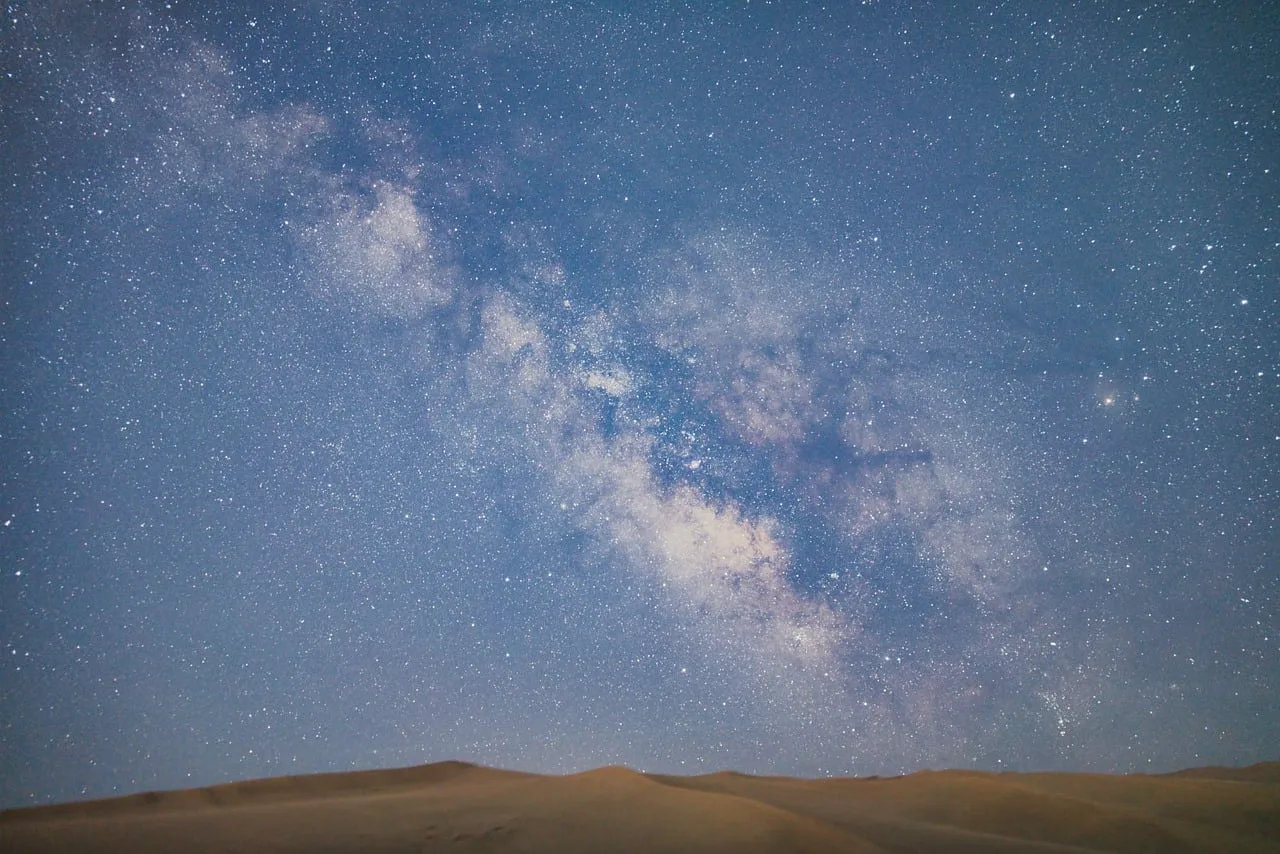
Great Sand Dunes is the right answer when maximum darkness is the goal. The dune field is large enough to walk away from the parking areas, and the nearest town glow stays low.
Which Park Fits Your Trip
Is maximum darkness the goal?
Great Sand Dunes
keep going
Black Canyon is the right answer for photographers, and for anyone who wants a dark sky a short walk from a paved road.
Hovenweep is the right answer on a Four Corners trip, or for anyone pairing night sky with archaeology. It is small, quiet and far from any interstate.
Florissant Fossil Beds is the right answer for a weekend out of Colorado Springs or Denver, where a four-hour drive is what kills the trip.
Readers chasing class 1 rather than class 2 should read Find Bortle 1 Skies before booking, because drive time usually decides the trip.
A checklist before you pick
- Check the moon phase, because a full moon erases most of the difference between these parks.
- Check smoke and haze forecasts, since western wildfire smoke crosses state lines.
- Check gate hours, because some sites lock the entrance after dark.
- Check whether overnight parking is allowed where you plan to set up.
Camping changes the answer, and US Dark Sky Parks covers which parks allow a fire.
What they all share
Every park here depends on weather you cannot book around. Night sky quality at all four is a ceiling rather than a promise.
Sleeping arrangements near these parks vary more than the parks do, and dark sky lodging asks what a room actually delivers after dark.
A sky class is a ceiling on how good a night can be. It is not a forecast for the night you booked.
How to choose between the close calls
When two parks tie on your criteria, choose the shorter drive and the lower climb to the viewing spot. Altitude helps the sky, but it hurts anyone who drove up from sea level that same day.
If the ranking is still tied, take the site with the closer hospital and the better road.
For a wider set of options outside Colorado, night sky destinations puts these parks beside the rest of the country.
Common questions
Is Great Sand Dunes darker than Black Canyon?
By most reports, yes. Great Sand Dunes has a wider open horizon and fewer nearby towns, while Black Canyon loses its lowest sky to its own walls.
Do I need a permit to stargaze at a Colorado dark sky park?
No. Casual stargazing needs no permit at these sites. Organized events and commercial photography may need one, which the park office handles.
Which park is closest to Denver for a short night?
Florissant Fossil Beds, roughly two hours from Denver and under an hour from Colorado Springs. Its eastern sky carries Front Range glow.