Guides
Part of Choosing a Travel Telescope: Six Tests and How to Try One First
Unpacking travel telescopes packing list: packing down
Packing for a telescope trip: protecting the instrument in transit, the small parts that end a night when lost, and what to watch while the optics cool down.
Packing for a telescope trip has two jobs. The first is getting the instrument to the site undamaged and complete: padding, and not losing small parts. The second is everything you need while the telescope does nothing, a longer period than beginners expect, because optics take time to settle to the outside air.
What to take away
- Pack the instrument so nothing can shift, and keep small parts in one labeled bag.
- Duplicate the items whose loss ends a nightlight, batteries, tripod plate.
- Plan for the cool down period, which is naked eye time whether you like it or not.
- Protect the optics from dew, and never pack a wet instrument away tight.
The instrument, in transit
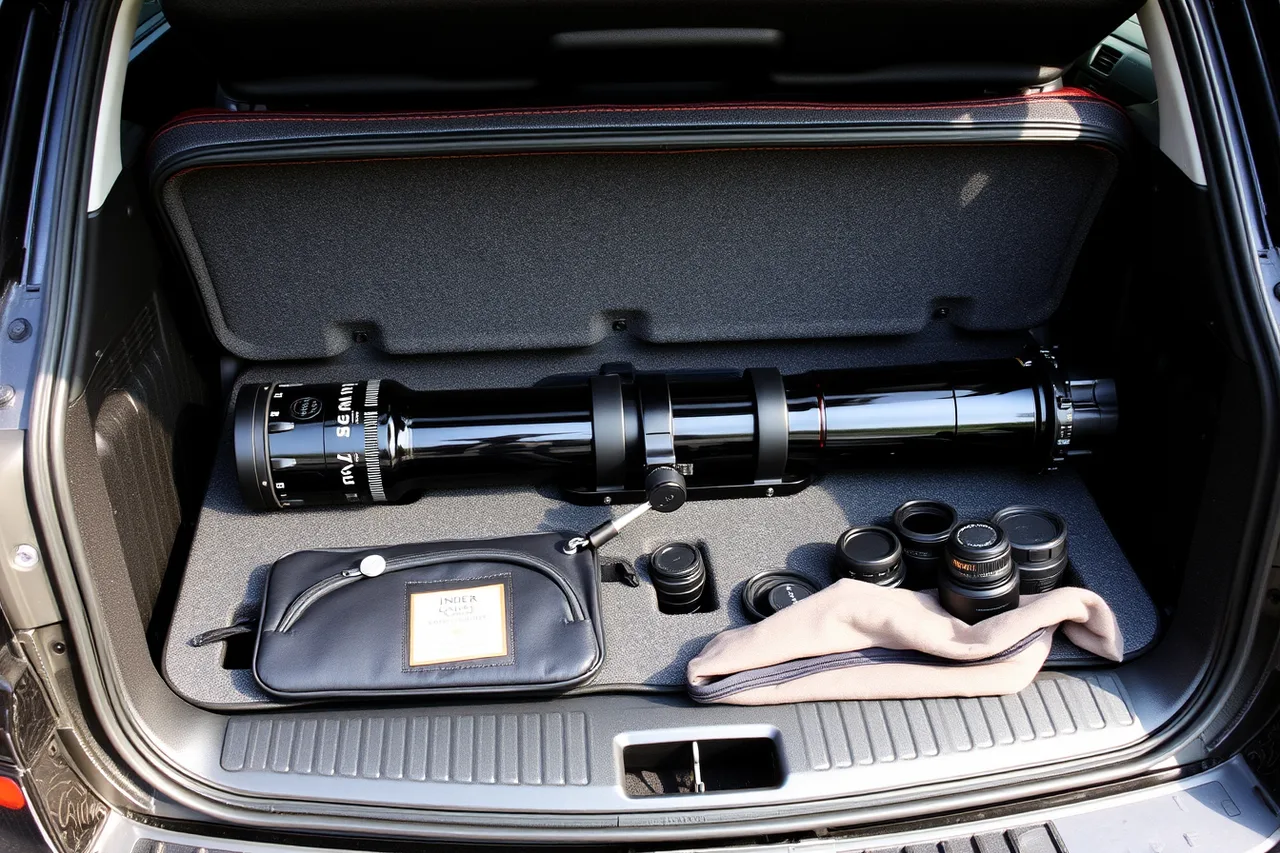
- A padded case or a hard box with foam cut to shape.
- Caps on every opening, and the finder removed if it protrudes.
- One small labeled bag for eyepieces, adapters, plates and screws.
- A spare tripod plate, because losing one ends the night entirely.
- A soft blanket between the case and anything hard in the car.
Pack the case so it cannot slide. Most transit damage happens on rough roads in the last few miles, not on the highway. A case that has rolled around a boot for an hour rarely arrives with everything still in its foam cutout. Check the contents when you arrive rather than when it gets dark.
The support kit
- Red headlamp, and a spare with fresh batteries.
- Power bank, kept warm in an inside pocket.
- Lens cloth, blower and a dew shield or heated strap.
- A folding table or box, so nothing important sits on the ground.
- Chair, mat, and the same warm layers any night trip needs.
- Written target list on paper, plus your exposure or eyepiece notes.
Use the cool down properly
While your optics settle, you are a naked eye observer, and that hour is a good one.
Stops where a telescope can sit out and cool are covered in which overnight stops suit a car with a telescope in it.
Meteors are the obvious target. The Park Service's explainer on shooting stars says they are not stars, just streaks of light from meteor dust burning up as it hits Earth's atmosphere at high speed.
Comets are the other good use of that time when one is around. NASA describes comets as cosmic snowballs of frozen gas, rock and dust, the size of a small town while frozen.
Nearing the Sun, one heats up and grows a glowing head larger than most planets, plus a tail streaming away from the Sun for millions of miles. A bright one is often better in binoculars than a telescope, another reason to keep binoculars in the car.
Packing down
Never seal a damp instrument in a closed case. If dew has formed, let it dry in the car with the case open, or at the accommodation before repacking. Dew is a seasonal problem as much as a nightly one, and which seasons make an instrument hardest to operate is worth knowing before you plan a trip around one.
Put the small parts bag away first, before you are tired, and count the eyepieces before you leave the site. A slow sweep of the ground with a white torch at the very end costs a minute. It finds the caps, plates and lens cloths that otherwise stay in the grass.
The general night packing list is in what to pack when the trip is built around the night sky, and the instrument criteria behind all of this are in choosing a travel telescope.