Rules
Part of Dark Sky Travel: Darkness, Moon and Access
Dark sky travel accessible options at Great Sand Dunes
Dark sky travel accessible options at Great Sand Dunes: parking, the accessible mat, sand wheelchairs, a beginner night guide and when to look up.
Most writing about dark skies assumes a walk in the dark over rough ground. Great Sand Dunes shows what a specific answer looks like: a named parking area, a mat, loan wheelchairs and a timing rule. Accessible night travel is mostly a matter of asking for that kind of detail.
What to take away
- Skywatching needs no equipment and no hiking, so a paved or matted edge near parking can be a fine observing site.
- At Great Sand Dunes the closest parking is the Dunes Parking Area, 1 mile north of the Visitor Center, with an accessible mat to the edge of Medano Creek and the sand.
- Balloon-tire sand wheelchairs are free to reserve, need a strong helper, and must come back at least half an hour before the visitor center closes.
- Plan to look up at least 1 1/2 hours after sunset or before sunrise.
- Cold is the accessibility issue people plan for least, and it shortens more nights than anything else.
Why the sky asks so little of the visitor
Looking up needs no hiking. NASA's Moon viewing tips note that you can study the Moon with a telescope, binoculars, or your eyes alone, and the same applies to constellations, bright planets and meteors.
What limits people is the walk to the site, the dark surface underfoot, the seating and the cold. Rather than asking which trail to take, ask which parking area faces the darkest horizon, and whether you can stay in or beside the vehicle.
The closer the site sits to where you sleep, the less night driving you do, and the less a cloudy forecast can undo the trip.
The route from parking to sand, step by step
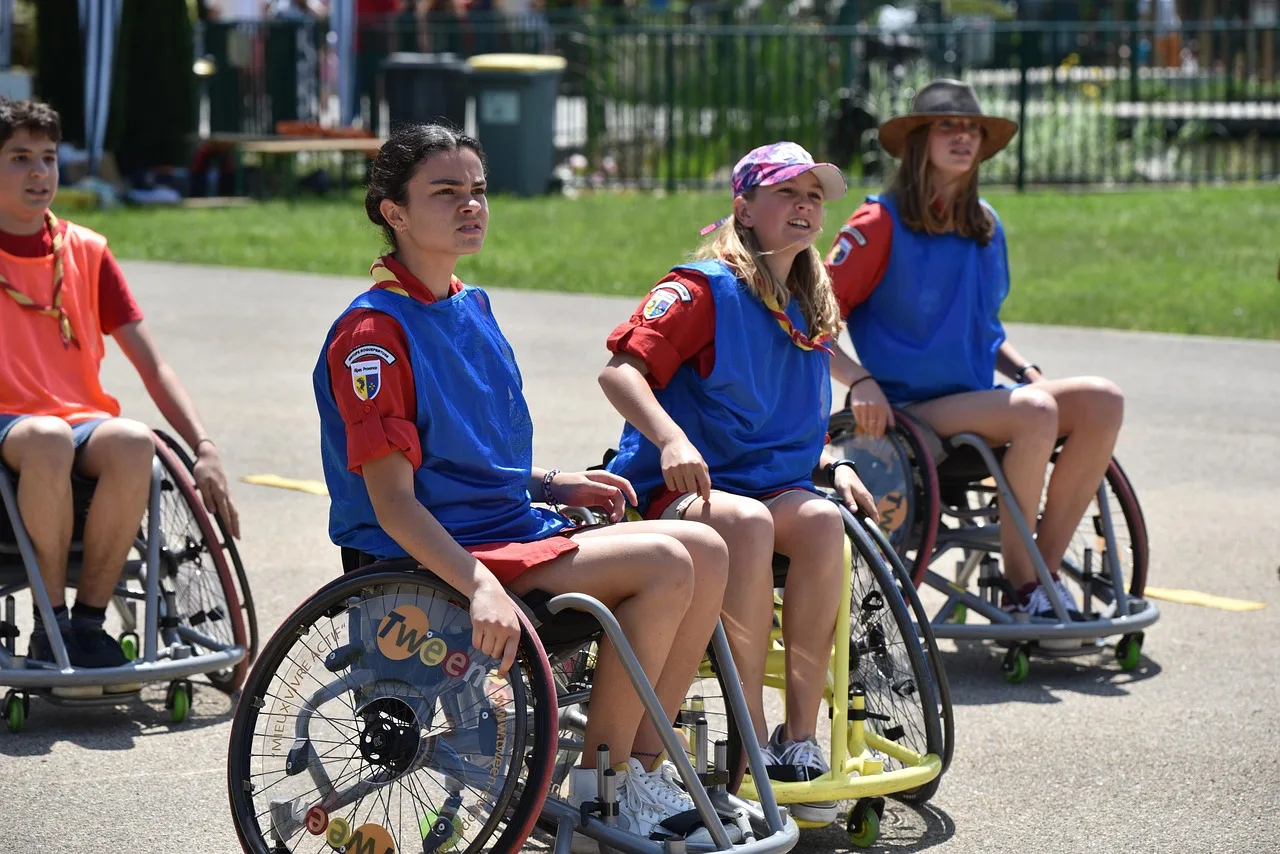
Great Sand Dunes answers the distance question in specifics. Its accessibility page names the closest parking to the dunefield as the Dunes Parking Area, 1 mile north of the Visitor Center, and describes an accessible mat from that parking area to the edge of Medano Creek and the sand.
- Park at the Dunes Parking Area.
- Follow the accessible mat to the edge of Medano Creek and the sand.
- Settle at the mat's end for a seated night view, or reserve a sand wheelchair for the sand itself.
- Return any chair at least half an hour before the visitor center closes.
Visitors can reserve the free use of balloon-tire sand wheelchairs at the visitor center, though a strong helper is needed to push one through sand. Because the chairs must be returned at least half an hour before closing, they rule out a late night on the dunes.
A paved or matted edge near the parking, rather than the dunefield itself, is the realistic night observing spot.
What the park's night material adds
Great Sand Dunes publishes a beginner's guide in its Experience the Night material, with a short video introduction. It explains why the park's dry air, low light pollution and high elevation make the sky so good there.
The guide notes that the park is certified as an International Dark Sky Park with gold-tier skies. It also advises viewing at least 1 1/2 hours after sunset or before sunrise, so the sun no longer lightens the sky. Video and written material let people prepare at home, which matters when a site briefing happens in the dark.
Certification is a separate question from facilities. DarkSky International, formerly the International Dark-Sky Association, designates International Dark Sky Places, and a designation speaks to the darkness overhead, not to the ground underfoot.
Ask whether a seated night program runs
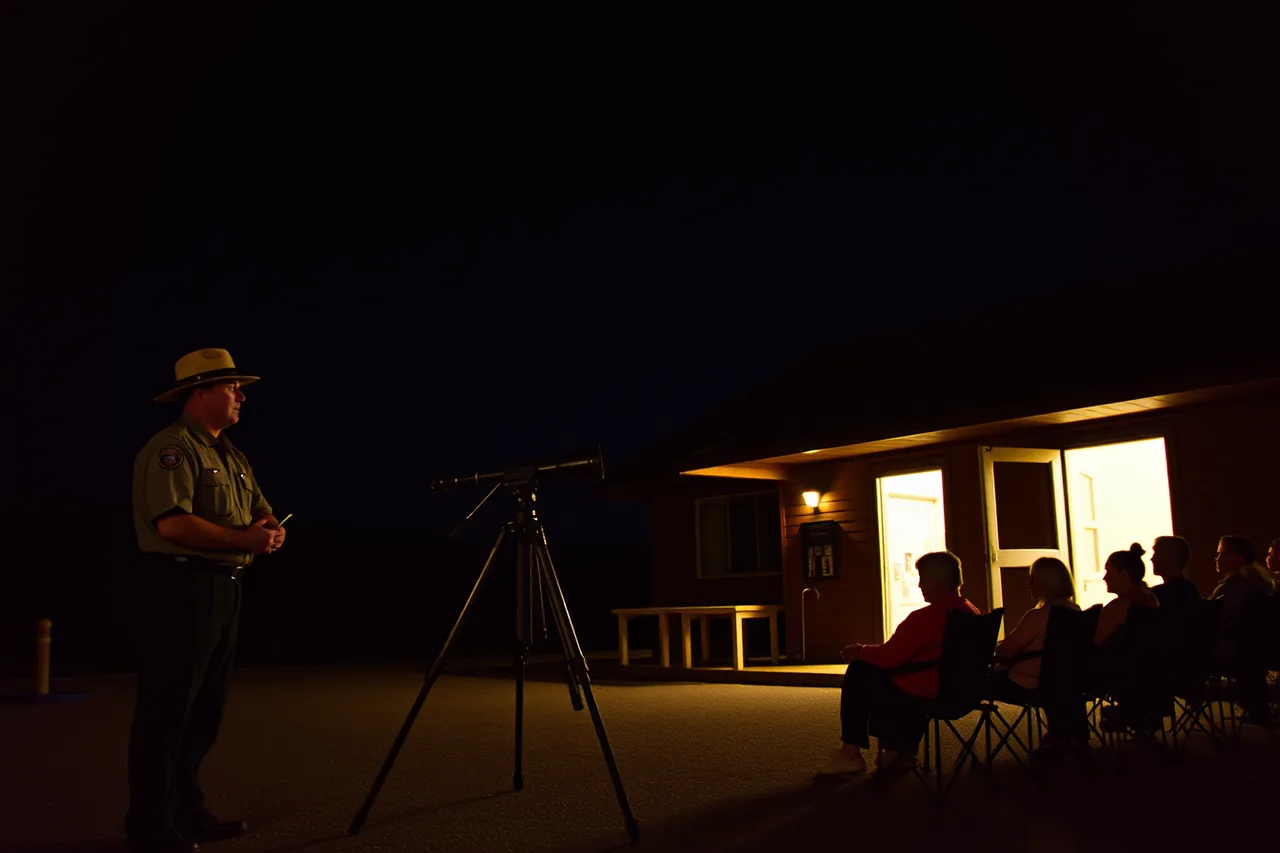
Ranger programs tend to be seated or slow moving by design. If a park runs a telescope evening at a visitor center rather than a hike, that is often the most accessible night event available.
Ask for the schedule rather than assuming one exists at this park. Put the question in writing: which dates, what time, and where the program is held.
A guide can help here too, as our piece on finding local guides explains.
Moon, cold and the drive home
Match the date to the Moon. For the Milky Way and faint stars, plan within a few days of the new moon. If the Moon is the attraction, the opposite applies: a first-quarter Moon is well placed in the early evening.
Sitting still under a clear sky is much colder than walking. Anyone with reduced mobility, poor circulation or a condition that makes temperature regulation harder should plan insulation for two hours of stillness, not for the walk.
Bring a blanket as well as a coat, and something insulating between a chair and the ground. The list for dressing to sit still applies to everyone on the trip.
Plan the end of the night as carefully as the start. Decide the finish time in advance, and stay close enough that the drive back is short. Dark adaptation and the drive home are covered for first-time visitors, and the broader argument is in what night travelers should know.
Carry the method to another park
Each Great Sand Dunes fact turns into a question that works elsewhere. Ask in writing, and keep answers with a date and a name, because conditions change with construction and season.
| Great Sand Dunes fact | Question for another park |
|---|---|
| Dunes Parking Area is the closest parking | How far is the viewing spot from the nearest parking? |
| An accessible mat reaches the sand's edge | What is the surface and the gradient between them? |
| Balloon-tire chairs are free to reserve | Is any equipment on loan, and who pushes it? |
| Chairs return half an hour before closing | What time does the site close, and is there a fee? |
| View at least 1 1/2 hours after sunset or before sunrise | Is there a seated ranger or telescope program, and when? |
Questions to ask before booking
- Distance and surface from parking to viewing spot
- Steps, curbs or slopes and their gradient
- Seating and wheelchair placement with southern view
- Night restroom and nearest lighting location
- Indoor or vehicle option in bad weather
In the United States, the Americans with Disabilities Act and Section 504 of the Rehabilitation Act set the baseline for public park facilities, and the National Park Service publishes accessibility information for each of its parks. Ask for the park's accessibility guide by name, and ask about a specific facility, such as a paved overlook or an accessible restroom.