Costs
Part of Dark Sky Travel: Darkness, Moon and Access
How to Budget for a Dark Sky Trip: Fuel, a Bed Near the Site and Gear
A planning guide to dark sky trip budgets: fuel, the bed near the site, park access and cold-weather kit, with illustrative bands to run on your own dates.
A dark sky trip rarely fails on price. It fails on a budget that counted only the obvious costs.
Observing is free. Darkness is a location, and locations cost fuel, beds and time. Here is where the money goes, with the arithmetic you can run on your own dates.
What to take away
- The sky is free. Fuel, the bed near the site and the second night are not.
- Price the round trip from your bed to the observing site, doubled, not from home.
- Camping is usually the cheapest bed near the site.
- Ranger night programs cost little but are rationed by release time, so treat them as a calendar item.
- Layers, a red light and a thermos are one-time buys that decide whether the trip works.
The four buckets to price
No national average survives contact with your dates. These are the four lines to price separately.
Four dark sky trip buckets
Transport
- What sits in it
- Fuel, tolls, rental
- Illustrative figure
- $0.20-$0.25/mile
- How to price
- Round-trip miles doubled
Stay
- What sits in it
- Campsite, motel
- Illustrative figure
- $20-$45 tent
- How to price
- Park and town rates
Access
- What sits in it
- Fees, programs
- Illustrative figure
- $20-$35 vehicle
- How to price
- Park fees page
Kit
- What sits in it
- Layers, red light
- Illustrative figure
- $120-$300 one-time
- How to price
- What you own
| Bucket | What sits in it | Illustrative figure | How to price your own |
|---|---|---|---|
| Transport | Fuel, tolls, rental if you fly | $0.20 to $0.25 per mile all-in | Round-trip miles to the site, doubled |
| Stay | Campsite, motel, second night | $20 to $45 tent site, $110 to $190 gateway motel | Current park and town rates for your dates |
| Access | Entrance fee, reserved programs | $20 to $35 per vehicle, $5 to $15 per program ticket | The park's own fees and reservations page |
| Kit | Layers, red light, seat, thermos | $120 to $300 one-time | What you already own |
The figures are illustrative planning bands, not quoted rates. The per-mile range is a typical all-in estimate for a mid-size car. It includes fuel, maintenance and tolls. The lodging bands are typical tent site and gateway motel rates.
Both were set as of May 2026 for 2027 planning. Fuel and lodging move by season and region, so check current prices for your dates before you commit.
A worked example: 400 round-trip miles, two nights at a tent site, one ranger program and one entrance fee. Transport costs $80 to $100. Stay costs $40 to $90. Program and entrance cost $25 to $50. Total $145 to $240 before one-time kit.
Per-night lodging varies more than fuel. Use these typical bands as planning placeholders for 2027, then check the park concessioner and two or three gateway motels for your dates.
| Region | Typical tent site per night | Typical gateway motel per night | Main driver |
|---|---|---|---|
| Southwest parks | $25 to $45 | $120 to $190 | Peak season and park demand |
| Mountain West | $20 to $35 | $110 to $200 | Ski season and town events |
| Upper Midwest and Northeast | $20 to $40 | $100 to $170 | Summer weekends and fall color |
| Pacific coast | $30 to $55 | $140 to $240 | Coastal demand and festival dates |
Keeping the buckets separate stops a cheap headline number from hiding an expensive trip. A motel two hours out can cost less per night and still be the pricier choice once you add the fuel and the late drive.
Getting there is the real variable
Fuel is the line people underestimate. Multiply round-trip miles by your vehicle's cost per mile, then double it if you drive the bed-to-site leg twice.
Price the drive to darkness
- Multiply round-trip miles by cost per mile
- Double it if you drive bed-to-site twice
- Add fatigue and late-night risk
- Compare against a nearby bed
Distance to darkness is personal. Someone near a mountain range reaches a good site in an hour. Someone in a coastal metro may need most of a day.
Building the plan around a nearby bed, as our two-day dark sky itinerary does, usually costs less than a long night drive.
Staying close enough
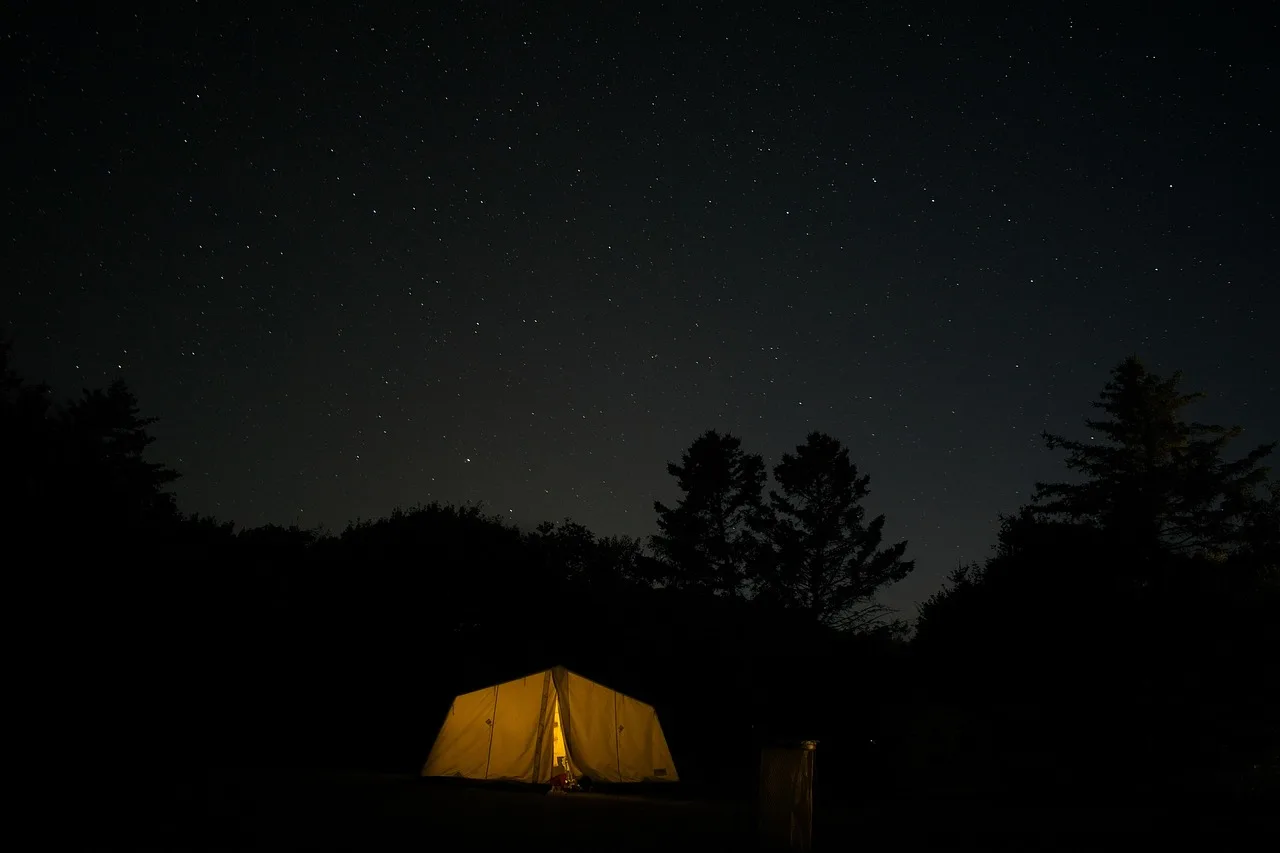
Camping puts you at the site instead of commuting to it. The Park Service's camping pages cover how park campgrounds work, what to bring, and how reservations are handled. Start there before comparing prices with a gateway town.
Camp or book a gateway room?
Is camping workable for your dates?
Camp at the site, no commute
Rank rooms by midnight drive time
Our two-night plan built to a camping budget shows the total when the campsite is the whole accommodation line.
If camping is not workable, rank rooms by drive time after midnight, then blackout curtains, then price. A room you can reach in fifteen minutes half asleep beats a bargain forty minutes away.
Tickets, permits and reserved programs
Ranger-led night programs are cheap and rationed. Bryce Canyon's full moon hike reservations show the pattern.
As of May 2026, tickets go through Recreation.gov in two releases: 15 tickets 14 days ahead and 10 more 5 days ahead. Both drop at 10 a.m. Eastern, first come, limit six per reservation, plus a small processing fee.
That shape repeats across parks. The cost is trivial; the calendar discipline is not.
Put the release time in your phone before you book anything else. Confirm current rules on the park page, since windows change between seasons. Watch for rules that carry no fee, since a night closure or a vehicle reservation system can force a longer drive or an extra night.
What people forget
Layers are the gap first-timers leave in the budget. Clear nights turn cold fast at elevation, and a fleece bought in a gateway town costs several times the price at home. The other gap is the second night, and our guide to dark sky travel in 2027 covers how much darkness you need to buy.
Common questions
Is a dark sky trip expensive?
Not inherently. The sky is free, so the cost is travel and a bed near a dark site. Price those two lines honestly and most trips land in the range of an ordinary weekend away.
Should I camp or take a room?
Camp if you can. If you take a room, choose it by drive time after midnight before you look at the nightly rate.
Do night programs cost much?
Usually very little, but they are limited and released on a fixed schedule. Check the park's own reservations page for the current release window and fees.
What is most overlooked?
Tolls and parking. They are small line items, but they can push a tight budget over.