Guides
Astronomy Itinerary Building: A Five-Step Plan
Astronomy itinerary building: target lists, timed night blocks, a certified dark-sky park, driving safety, and Moon and cloud contingencies.
An observing itinerary differs from a travel itinerary: astronomy itinerary building follows darkness, not opening hours. Its schedule shifts as twilight changes through the year, and it records what to do when the plan fails.
Once you write one, every later trip takes about twenty minutes to plan. This is the process.
What to take away
- Build the itinerary around a target list, not around places to visit.
- Time blocks run from the end of twilight to your agreed finish, not from dinner.
- Every block needs a fallback target that works in worse conditions.
- The driving plan is part of the itinerary, and it is the part most likely to hurt someone.
Step one: write the target list
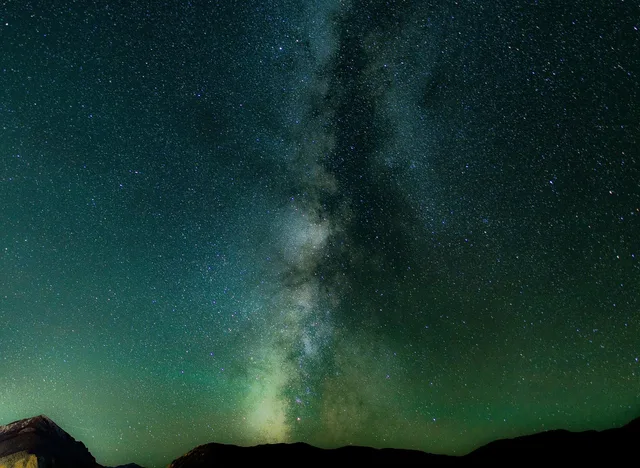
Start with what you want to see, in priority order, and note what each target needs. A target list might include the Milky Way core, which needs real darkness and a southern horizon. Saturn needs a telescope and steady air, while the Moon at first quarter needs nothing.
Target requirements
Milky Way core
- Darkness
- Real darkness
- Horizon
- Southern
- Telescope
- No
- Steady air
- No
Saturn
- Darkness
- Any
- Horizon
- Any
- Telescope
- Yes
- Steady air
- Yes
First-quarter Moon
- Darkness
- Any
- Horizon
- Any
- Telescope
- No
- Steady air
- No
Which targets are available depends on the month, so check what each season actually puts in the sky before fixing the list.
Planets deserve a spot on most lists because they are reliable, and NASA's explanation of planetary alignments and planet parades notes that most clear nights show at least one bright planet.
Two or three are commonly visible around sunset, and occasionally four or five bright planets are visible at once to the naked eye. A planet survives a mediocre sky.
Step two: turn the list into time blocks
Each night divides into blocks:
- End of astronomical twilight:Start with faint-sky targets such as the Milky Way core, when it is in season and visible.
- Early night:Catch targets that are setting earlier, including planets when they are above the horizon.
- Middle of the session:Continue with targets that remain well placed, or switch to a fallback if clouds obstruct the primary.
- Late session:Finish with bright targets, such as the Moon, or targets that rise later, and stop at the agreed finish time.
Night blocks
- TwilightSet up and find bearings
- Early darkLow west targets that set
- Middle of nightHighest priority target
- LateWhatever has risen since
Write block times for your actual dates, anchoring the first block to the end of astronomical twilight. The U.S. Naval Observatory's Astronomical Applications data can help check twilight times, Moon phases, and Moon rise and set for your location; use Stellarium to confirm when targets are visible. Put faint targets in the darkest available blocks, especially when the Moon is below the horizon or near new phase. Assign one primary and one fallback target to each block; a fallback makes the itinerary useful, and without it a thin cloud bank ends the night.
At trip level, a spare night does the same job, which is why a slower plan usually delivers more observing.
Step three: plan the driving
This is the part that gets skipped. Write down the route, the drive time, where you can turn around, and the agreed finish time. Then treat the drive as a hazard rather than as transport.
Big Bend National Park is an International Dark Sky Park in the International Dark Sky Places program administered by DarkSky International (formerly the International Dark-Sky Association). Big Bend National Park is direct about why. Its safety page sets a 45 mile per hour maximum speed. It warns drivers to watch for javelina, deer and rabbits grazing on road shoulders, especially at night.
Vehicle accidents are a major cause of injury to visitors. Park roads were built for slow scenic driving, not for covering distance.
Step four: write the contingency
Three lines are enough. What you do if it is cloudy at the primary site. What you do if the Moon is brighter than expected. What you do if someone is too cold or too tired to continue. Agreeing these in daylight prevents arguments at one in the morning, when nobody is at their best.
Step five: keep the document
Save the itinerary after the trip with notes on what worked. The second version writes itself, and the fifth one is close to a personal observing manual. For the decision sequence that comes before all of this, see planning stargazing trips, and for the wider frame, dark sky travel in 2027.
Common questions
How detailed should an itinerary be?
What if I have no telescope?
Why plan fallbacks?
When should I write it?
In this guide
- Guide to astronomy itinerary building cost: the time budgetAn observing itinerary has two budgets. One is money; the other is dark hours. Here is how to plan both, and why free tools protect the second one best.
- Which part of astronomy itinerary building planning really comes down to the final week?Astronomy itinerary building planning: a twelve week countdown for an observing trip, from picking the anchor date to the final forecast check.
- Astronomy itinerary building time: planning by seasonAstronomy itinerary building time by season: night length, the Geminids and Quadrantids, desert weather at two parks, and a worked winter itinerary.
- How to approach astronomy itinerary building packing: load in reverse orderAstronomy itinerary building packing means planning around moonlight, organizing each observing block, and loading first-needed gear last for a dark-sky trip.