Features
Part of Sorting real night sky destinations from rumors, category by category
Plan night sky destinations for autumn: places and dates
Plan night sky destinations for autumn: month windows for four U.S. parks, a booking check around the new Moon, and the Orionid and Leonid showers.
Summer gives the Milky Way and warm nights but short darkness. Winter gives long, transparent nights and serious cold. Autumn is the quiet compromise most experienced observers pick, and it is the season this plan is built around. The wider seasonal picture covers the other three.
What to take away
- Autumn trades summer's short, warm nights for steadier air and emptier sites, but it cools fast after sunset.
- September or October suits Canyonlands and Natural Bridges, October or November suits Big Bend, and Acadia in September or October needs a fog check.
- Campgrounds and nearby rooms are easiest to book at short notice in autumn, which helps when a forecast moves a night.
- The Orionids and the Leonids are the autumn meteor showers. Look up the current year's peak and the Moon.
- Whatever the month, check the Moon phase before booking.
Why autumn is the compromise season
Autumn is the quiet compromise most experienced observers pick. Evenings are still usable, the air is often steadier than in summer, and the sites are emptier. The cost is that temperatures fall fast once the sun is down, so the evening layers matter more than the gear.
Season by strengths and costs
Spring
- Nights
- Mild
- Milky Way
- Core late
- Crowds
- Quiet parks
- Air
- Mild
- Booking
- Easy
Summer
- Nights
- Warm, short
- Milky Way
- High evening
- Crowds
- Crowded
- Air
- Stormy
- Booking
- Hard
Autumn
- Nights
- Cooling fast
- Milky Way
- Balanced
- Crowds
- Fewer people
- Air
- Stable
- Booking
- Easiest
Winter
- Nights
- Longest
- Milky Way
- Not prime
- Crowds
- Closed roads
- Air
- Often clearest
- Booking
- Hard
The Milky Way's brightest part sits in evening skies through summer and into autumn, so an early autumn evening can still show it. Winter offers the longest nights, but it adds cold, closed roads and snow. Autumn asks for less preparation than that, and for fewer sacrifices than a crowded July.
Plan clothing for stillness, not for walking. Cold, not cloud, ends most sessions early, and a first night under a clear sky is colder than most people expect.
Where to go in September, October and November
Treat the windows below as a starting point, then verify weather, access and the Moon before you commit to a date.
| Window | Place | What to check |
|---|---|---|
| September or October | Canyonlands National Park, Natural Bridges National Monument | Weather, access and the Moon |
| October or November | Big Bend National Park, Texas | Desert option; check the forecast |
| September or October | Acadia National Park, Maine | Fog on the coast |
Canyonlands, Natural Bridges and Big Bend are designated International Dark Sky Parks by DarkSky International. Regional weather matters as much as the calendar: desert sites are hot and monsoon prone in high summer, and superb in late autumn.
Coastal sites fight fog in some months and are clear in others, which is why Acadia carries a fog warning in the table. Mountain sites are magnificent in winter and unreachable when the pass closes. Check fog and road access for your own window before you fix a date.
Canyonlands National Park makes the reward clear on its stargazing page. The parks and monuments of the Colorado Plateau share some of the darkest skies remaining in the contiguous 48 states, and the page adds that no two nights are alike, so check conditions and moon phases before you head out.
Booking autumn at short notice
Campgrounds and nearby rooms are easiest to book at short notice in autumn, which matters when a forecast makes you move a night. That makes it the easiest season for a two-night trip built around one campsite.
Leave a spare night in the plan rather than a tight schedule. A clear night decides the trip, and a booking you can shift by a day is worth more than a cheaper one you cannot. The guide to slowing the trip down explains how to build that slack in.
The autumn meteor showers
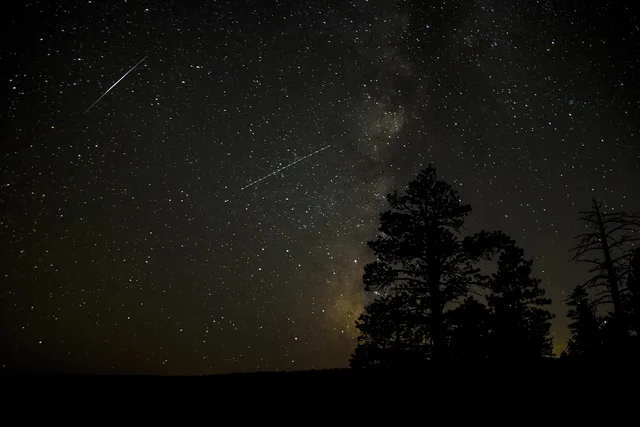
Meteor showers recur on set dates because Earth passes through the debris trails of comets. The two to know for autumn are the Orionids, linked to comet Halley, and the Leonids, associated with comet Tempel-Tuttle, both listed in NASA's overview of meteor showers.
Meteor shower peak dates
- Mid AugustPerseids peak
- Every 135 yearsSwift-Tuttle passes Sun
- AnnuallyShowers recur from comet debris
- Each yearCheck peak date and Moon
The Orionids typically peak around October 21-22, and the Leonids peak in mid November. Those dates may or may not fall near new Moon, so look up the current year's peak and check the Moon for it, rather than assuming a shower will be worth the trip every year.
A booking check around the new Moon
Run the same check for any autumn date, so the nights you hold are worth the drive.
- Pick the window from the table above, then note the new-Moon date.
- Use the timeanddate Moon Phases calendar to find that date, then check local moonrise and moonset.
- Hold a three-night window centered on the new Moonthe new-Moon night and one night on either side.
- Check the forecast and the site's access before you pay for anything.
- Book the campsite or room with the most flexible terms.
Moonlight is the reason for step two. Canyonlands says you will see the darkest skies during a new moon or when the moon is below the horizon, and that even a thin crescent can make fainter stars or the Milky Way harder to see.